
Buying Guides
Choosing an Insulation Tester for Industrial Use
Learn how to choose an insulation tester for motors, cables and switchgear: test voltage, resistance range, safety rating, and sample checks before you buy.
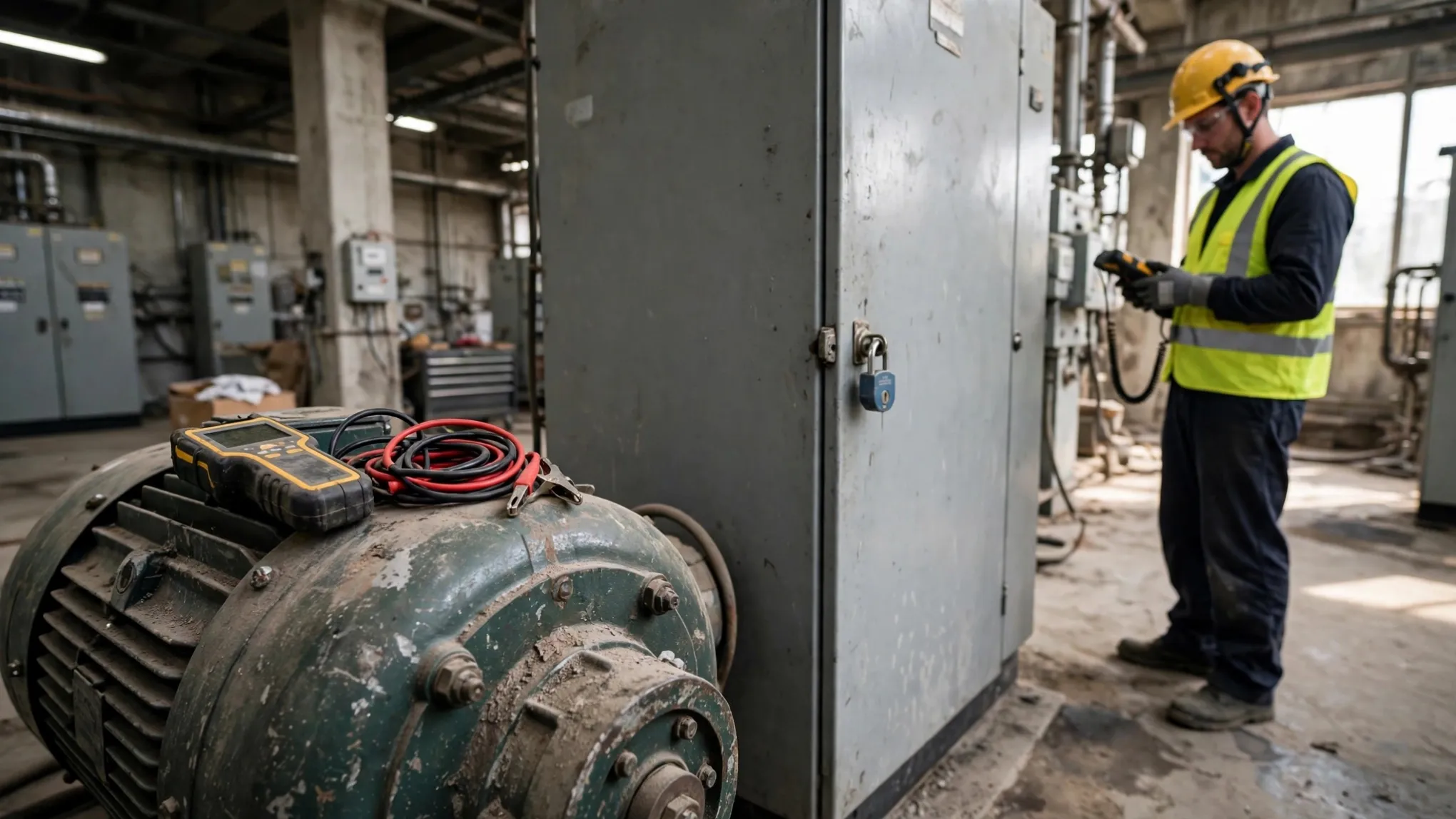
The Short Answer: Match the Tester to the Asset
Buy for the equipment you actually test. The right insulation tester offers a test voltage covering your motors, cables, and switchgear, a resistance range that can still show change as insulation ages, and operation your technicians can repeat safely in the field.
The highest voltage or widest range does not automatically make a tester better. An overspecified tester can be harder to use; an underspecified one may give a reassuring reading that hides a developing fault.
What the Reading Means
An insulation tester, often called a megohmmeter, applies a known DC test voltage and measures leakage current. The result, in megohms or gigohms, shows the condition of insulation between conductors, or between a conductor and earth.
A high, stable reading generally suggests healthy insulation; a low or falling reading suggests moisture, contamination, ageing, or damage. The trend matters more than any single number. Good testing needs a repeatable method: the same voltage, test points, and clean connections, with records you can compare over time.
Start From the Asset
List what you test most often before comparing models:
- Motors and pumps: checks after maintenance, after a period out of service, or after a trip. You need a robust handheld tester, clear readings, and safe discharge.
- Cables and wiring: checks for damage, moisture, and installation quality. Lead length and voltage choice matter more than laboratory precision.
- Switchgear and panels: work near live circuits. Safety rating, live-circuit warning, and a clear procedure are essential.
- Transformers and larger plant: higher voltages and longer, timed tests may be needed.
- HVAC, marine, and site equipment: dust, vibration, and long days. Durability, battery life, and daylight readability decide whether testing actually happens.
If a tester cannot do your three most common jobs well, it is not the right tester, however impressive its other features look.
Five Criteria That Matter in the Field
1. Test Voltage
Voltage must suit the equipment. Most handheld testers offer several selectable voltages, for low-voltage circuits, industrial motors, and higher-voltage plant. What matters is choice and clarity: can the technician select the required voltage without confusion, and is it clearly displayed during the test? Confirm the suitable voltage for each asset type before ordering.
2. Resistance Range and Resolution
A useful tester must measure high enough for healthy insulation, with enough resolution where deterioration first appears. If readings always show the same maximum, you cannot track a trend. Stable, repeatable readings matter more than extreme precision, and storage or recall helps if you manage many motors or sites.
3. Safety and Build Quality
Even handheld testers use high test voltages, so check the safety category rating for your work environments. A bench-only rating is not a substitute for distribution-level work. The tester will also be carried, dropped, used with gloves, and exposed to dust and moisture, so look for a solid case, protected sockets, durable leads, and a display readable outdoors. Ask whether replacement leads are available, and confirm live-circuit warning, automatic discharge, and clear indication while voltage is present.
4. Timed Tests and Extra Functions
Many industrial testers offer timed tests, such as polarization index or dielectric absorption ratio, comparing resistance at two points during one test. These help distinguish healthy insulation from moisture-affected insulation, and are valuable for larger motors, transformers, and critical plant. Continuity testing and voltage measurement to confirm a circuit is dead can also help. Do not pay for a feature list you will never use.
5. Usability
The best tester is the one technicians use correctly. Consider weight, grip, buttons, battery life, lead storage, and one-handed operation. During sample evaluation, give it to daily users, not only to the approver, and watch how long it takes to set the voltage, run a test, discharge the asset, and record the result.
Which Type Fits Which Job?
Work profile | What matters most | What to avoid |
|---|---|---|
Light maintenance and HVAC | Easy operation, common voltages, durable case, good battery life | Unused, complex functions |
Industrial field maintenance | Several voltages, timed tests, plant safety rating, trend records | Bench-only tester, unclear voltage selection |
High-voltage and critical plant | Higher voltages, stable timed tests, strong safety protection, data storage | Judging only by maximum voltage |
Your asset list and safety procedure should always override a generic category.
Common Misjudgments
Even a good tester gives poor results if the method is wrong. Clean and dry test points first: dirt or damp creates leakage paths that look like failed insulation. Note temperature and humidity, and compare like with like. Always discharge capacitive equipment after testing. Repeat a low reading and check connections and history, rather than treating one reading as final. Confirm test voltage in advance: too low may miss a fault, too high may stress equipment.
Evaluate a Sample Before a Bulk Order
For distributors and importers, sample testing removes most buying risk. Test on assets similar to your customers' equipment, and check repeatability; whether the selected voltage is obvious and cannot be changed accidentally; lead quality; operation with gloves and readability outdoors; live-circuit warning and discharge; manual clarity; and calibration support, spare leads, warranty, and repair route. Confirm support before ordering, and keep sample results with your decision.
OEM, Branding, and After-Sales Support
For private-label buyers, discuss logo placement, packaging, manual language, and labelling requirements early, so they are agreed before production. A supplier experienced in OEM and ODM work can confirm what can be customised and what must remain standard for safety reasons. Ask also how calibration is handled, how long spare parts remain available, and what field repair looks like. A low price is poor value if calibration, repair, or lead replacement becomes difficult.
Questions to Ask Your Supplier
A reliable supplier should answer clearly, in writing for specifications and support terms: Which voltages does it offer, and for which assets? What is the range and resolution where deterioration first appears? What safety rating applies? Does it provide timed tests, live-circuit warning, and automatic discharge? What leads are included, and are replacements available? How is calibration supported? What can be customised for private-label orders? Confirm these for the exact model you intend to buy.
Conclusion
Choosing an insulation tester is not about finding the most powerful instrument available. It is about finding one your team can use safely and repeatably, often enough for results to mean something. Start from your assets, check voltage and range against real jobs, confirm safety and build quality, and evaluate a sample before committing to volume. Done well, it means fewer unexpected motor failures and clearer records.
Internal link suggestions: anchor text directions for related categories on the site, such as digital multimeter selection, clamp meter vs multimeter comparison, and insulation tester maintenance and calibration — to be linked only to existing site pages, without inventing URLs.
For insulation testers and other handheld test instruments, including OEM and ODM options, contact Shenzhen Zhanyueda Technology Co., Ltd. via zydhardware.com to discuss your application and request a sample for evaluation.