
Buying Guides
How to Choose a Gas Detector for Industrial Safety
How to choose a gas detector for industrial safety: match gas types, single vs multi-gas models, alarms, sensor life and calibration before buying or reselling.
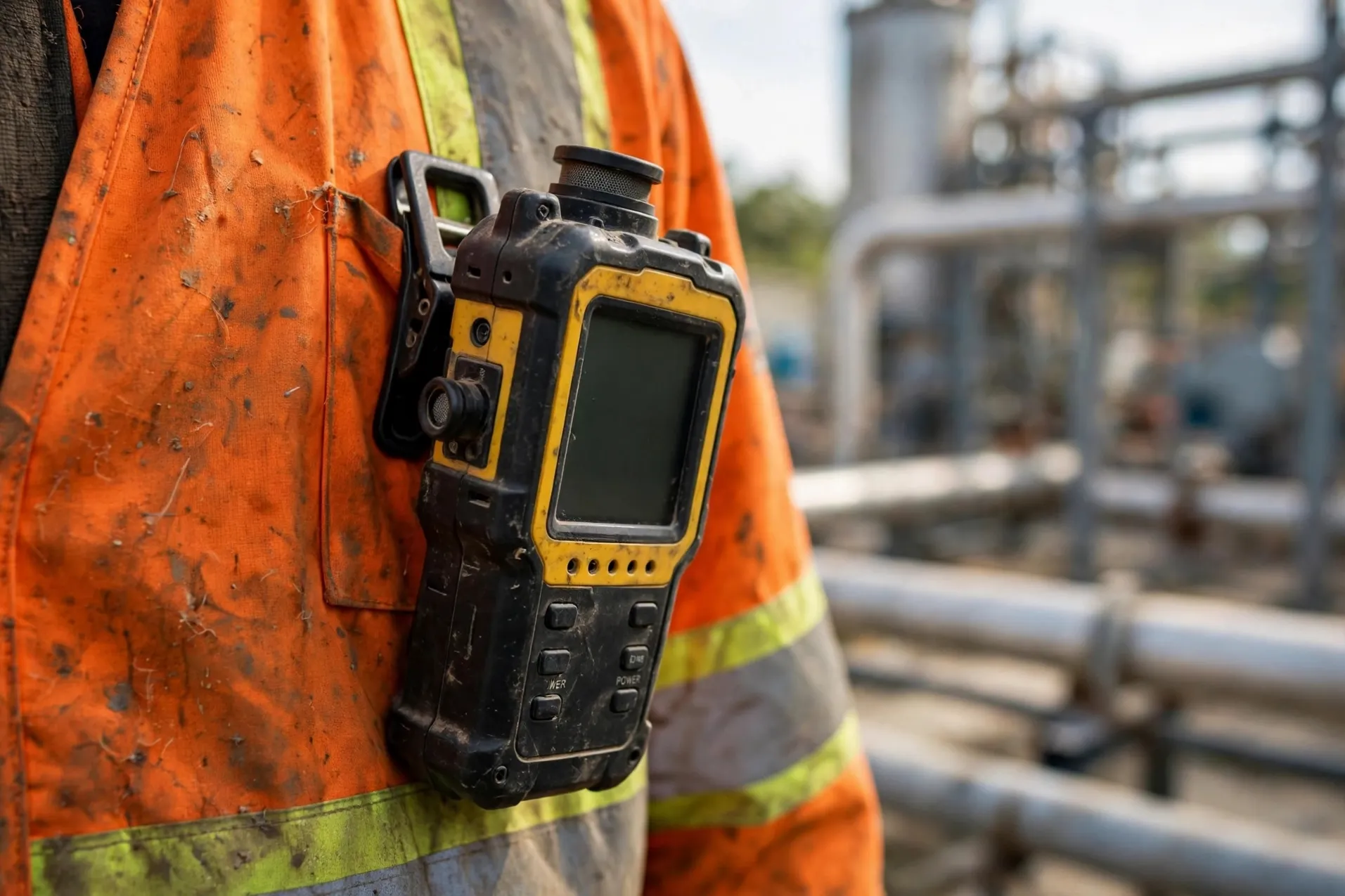
The Short Answer: Start With the Gas, Not the Device
A gas detector is only useful if it detects the gases that are actually a risk in your workplace. Before comparing prices, answer three questions: which gases could be present, where will the detector be used, and who will act on its alarm?
If those answers are clear, choosing between single-gas and multi-gas, and between portable and fixed, becomes much simpler. If they are not, even a well-made detector can give a false sense of safety — it may measure the wrong gas, in the wrong place, or with a sensor that has not been checked recently.
Step 1: Identify the Gases You Need to Detect
No single sensor covers every gas, so list the risks site by site.
Oxygen depletion and enrichment. In confined spaces, tanks, pits, and poorly ventilated rooms, oxygen can fall without obvious warning. Oxygen monitoring is often the starting point for entry work, because low oxygen affects judgement before a worker notices a problem.
Flammable gases and vapours. In fuel storage, painting, chemical handling, and work around gas lines, the risk is an explosive atmosphere. These detectors are commonly described in terms of the lower explosive limit (LEL). The key point is whether the instrument is set up for the flammable gases present on that site, and whether workers understand its alarm level.
Toxic gases. Examples include carbon monoxide in workshops and boiler rooms, and hydrogen sulfide in wastewater and petrochemical work. Toxic gases can be dangerous below any smell threshold, and some lose their warning smell as concentration rises, so smell alone is never a safe check. If a gas is possible but unconfirmed, ask the supplier whether that sensor can be added, rather than assuming coverage.
Step 2: Single-Gas, Multi-Gas, or Fixed?
Model type | Best for | Main limitation |
|---|---|---|
Single-gas detector | One known, stable risk | Cannot warn about other gases present |
Multi-gas detector | Confined-space entry and mixed-risk sites | More sensors to maintain and replace |
Fixed detector | Continuous monitoring of a known area | Only protects the area it covers |
A multi-gas detector is often the safer default for confined-space entry, because several risks can be present at once. A single-gas detector can be right when the risk is genuinely limited to one gas, confirmed by a site assessment. The mistake is to buy single-gas to save money, then use it where other hazards are also present.
Portable detectors move with the worker and suit maintenance and entry work: look for a display readable in low light, a loud audible alarm, and vibration for noisy environments. Fixed detectors suit plant rooms and storage areas where a leak could build up unnoticed; here, installation, power supply, and how alerts reach people outside the area matter most. Many operations need both.
Key Selection Criteria
Alarms workers will notice and understand. The display should show which gas triggered the alarm, and alarm levels should be adjustable to site procedures. Confirm any alarm or regulatory claim against the supplier's documentation and local requirements, not a general marketing statement.
Sensor life and replacement cost. Sensors wear out, so this is a total-cost issue. Ask how long each sensor is expected to last, whether sensors can be replaced individually, what a replacement costs, and whether specialist service is needed. A low-priced instrument with short-lived, hard-to-replace sensors can cost more over two years than a better-supported alternative.
Battery life and durability. For portable use, battery life should cover a full shift with margin, with a clear low-battery warning. Detectors are also dropped and used with gloves on, so a robust housing and simple controls matter more than a long feature list.
Data logging, only if it will be used. Records of readings and alarms support incident review, but only if data can be retrieved and understood easily. Ask how records are downloaded, and do not pay for logging no one will use.
Calibration and Bump Testing: The Step That Decides Trust
A detector can look ready even when its sensor is not.
A bump test is a quick before-use check: expose the detector to a known test gas and confirm that it responds and alarms. It is not a full calibration.
Calibration adjusts the instrument so its readings match a known gas concentration. It is needed at the supplier's recommended intervals, after a failed bump test, after exposure to a high concentration, and whenever readings look doubtful.
Before buying, ask what test gas and accessories are needed, how often calibration is recommended, whether it can be done on site, and what happens if a unit fails a bump test in the field. For distributors, clear calibration support is a commercial advantage: customers who can keep a detector trustworthy are less likely to return it or dispute a reading.
Choosing for Different Applications
Confined-space entry needs multi-gas coverage including oxygen, clear alarms, and a bump test before entry. Wastewater and drainage work needs toxic-gas coverage relevant to the site and reliable calibration support. Oil, gas, and fuel handling needs flammable-gas detection and durable construction. Workshops and boiler rooms need carbon monoxide awareness and simple daily checks. Distributors should stock the common gas combinations for their market, with replaceable sensors and calibration accessories, rather than a narrow model that fits only one customer type.
Sample Evaluation and Supplier Questions
With a sample, check that it detects your customers' actual gases at their required alarm levels; that the alarm is unmistakable in a noisy, low-light environment; that a new user can run a bump test unaided; that the battery lasts a full shift; and that calibration gas, accessories, and sensor replacements are available, and at what cost. If a sample fails any of these checks, a larger order will only multiply the problem.
Also ask your supplier:
- Which gases does this model detect, and which does it not detect?
- What is the expected sensor life, and can sensors be replaced individually?
- What is needed for bump testing and calibration, and how often is each recommended?
- What is battery life in real shift use, and what charging options are available?
- Can you supply a sample for testing in our customers' working conditions?
For distributors and own-brand buyers, confirm OEM and ODM options — logo, packaging, user manual, and barcode labelling — and whether those details stay consistent across repeat orders. Confirm warranty handling and technical support, and confirm any minimum order, lead time, or certification claim directly with the supplier before relying on it.
Final Checklist
Before ordering, confirm: the gases covered match the real site risks; the model fits portable, fixed, or combined use; alarms are clear in the working environment; sensor life, replacement, and calibration routes are understood; battery life covers a full shift; and after-sales support is confirmed.
A gas detector is safety equipment, not just a measuring device. The right choice is the one workers will actually check, wear, and trust — and that trust is built by correct gas coverage and a clear calibration routine, not by the longest feature list.
Internal link anchor suggestions: gas detector selection guide, portable multi-gas detector for confined spaces, industrial safety instruments for site monitoring.
Looking for a gas detector for industrial safety, resale, or site use? Browse the measurement instrument range at zydhardware.com and contact Shenzhen Zhanyueda Technology Co., Ltd. for product details, sample evaluation, and OEM/ODM options.