
Buying Guides
How to Choose an Industrial Multimeter
Choosing an industrial multimeter? Compare True RMS, CAT safety rating, range, accuracy and durability to pick a meter your team can trust on industrial sites.
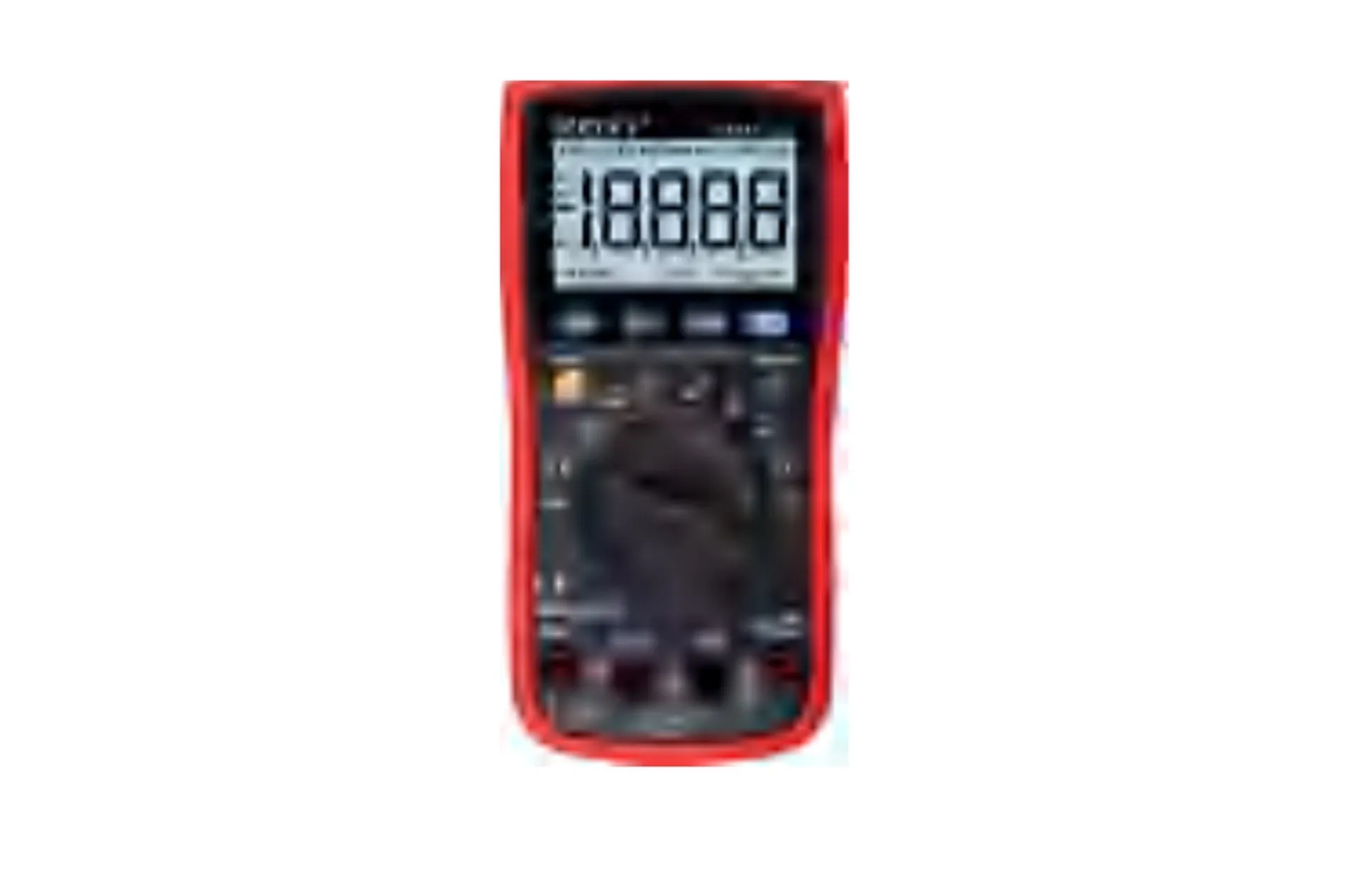
The Short Answer: Buy for the Job, Not the Highest Number
An industrial multimeter is a working tool, not a bench curiosity. The right one measures the voltages and currents your team actually meets, gives repeatable readings in noisy environments, and survives drops, dust and damp.
Start from the job list, not the specification sheet: the three measurements your technicians make most often, the highest voltage they work near, and the worst environment they work in. A meter covering those three jobs well beats one with a headline figure you never use.
What Makes Industrial Use Different
A household meter may only check a battery or a wall outlet. Industrial work is harder:
- Higher energy circuits: distribution boards, motor control panels, three-phase equipment and industrial machinery.
- Noisy signals: variable-frequency drives, switched-mode power supplies and other non-sinusoidal waveforms.
- Harsh conditions: dust, vibration, temperature swings and outdoor work.
- Repeatability matters: readings feed into maintenance records and go/no-go decisions.
That is why price alone is a poor guide: a meter that drifts or fails early costs far more in rework and repeat visits than the saving on its purchase price.
7 Criteria That Decide Whether a Meter Is Fit for Site Work
1. True RMS for Real-World Waveforms
On a clean sine wave, average-responding and True RMS meters agree. On the distorted waveforms from drives, inverters and modern electronic loads, they do not — an average-responding meter can under-read significantly and hide an overload.
For drives, UPS systems, LED lighting or any electronically switched load, True RMS is the difference between a reading you can act on and one you have to second-guess.
2. Safety Rating Matched to the Circuit
Safety ratings describe the transient overvoltage environment a meter is built to withstand, not just its maximum voltage reading. Circuits closer to the incoming supply, and outdoor or distribution equipment, generally present a higher transient risk than a final branch circuit.
Before buying, confirm the rating your work requires against the supplier's documentation for the exact model you intend to order. Never assume a rating from a similar-looking model, or use a meter above its rated category. If a supplier cannot confirm the rating in writing, treat that as a warning sign.
3. Range, Resolution and Accuracy — in That Order
Range answers a simple question: can the meter measure what you need, with margin to spare? Check both ends — a meter that misses a small control voltage or tops out below your highest working voltage will fail on routine jobs.
Resolution is the smallest change the display can show; more digits are not always better. Accuracy tells you how close the reading is likely to be to the true value — and conditions matter, since bench accuracy is not the same as accuracy on a cold, noisy site. For trending, repeatability often matters as much as laboratory accuracy.
4. Current Measurement That Fits Your Workflow
Think about how your team actually measures current. A standard multimeter measures in series, which means breaking the circuit — fine for small control circuits, but slow and disruptive on larger equipment.
Many users pair a multimeter with a clamp meter for non-contact checks, or choose fused inputs for in-line work. Either way, check the fuse arrangement and maximum current rating.
5. Durability, Display and Battery Life
A meter that stays in the workshop because it is fragile, hard to read or always flat is a wasted purchase. On a sample, check the protective boot, glove-friendly grip, backlit display, controls that work without looking, and battery life that covers a normal shift.
6. Features That Save Time on Site
Extra features only help if they match real jobs. Useful ones include min/max recording for intermittent faults, relative mode for comparison, low-impedance mode to rule out ghost voltages, and capacitance or temperature measurement where the team otherwise carries a second instrument.
Resist features that add menus and cost but no daily use; prioritise the two your technicians would actually reach for in a week.
7. Leads, Probes and Accessories
The meter is only as good as its connection to the circuit. Check whether the supplied leads match the meter's safety rating, whether replacements are standard and affordable, and whether a case protects it in a tool bag or vehicle.
Different Jobs, Different Priorities
Typical job | What to prioritise first |
|---|---|
Electrical maintenance and panels | Safety rating, True RMS, robust housing |
HVAC and building services | Temperature measurement, capacitance, clear display |
Motor and drive servicing | True RMS, min/max recording, current range |
Field service and commissioning | Battery life, durability, portable case |
General workshop and repair | Range coverage, ease of use, lead quality |
How to Evaluate a Sample Before You Order in Volume
Never place a volume order on a specification sheet alone. Put a sample through your team's real work:
- Test your three most common jobs on real equipment, not just a bench supply.
- Compare readings against a meter your team already trusts, on the same test points.
- Check display and controls with gloves and in low light.
- Confirm the paperwork — safety rating, manual, warranty and calibration support — for the exact model supplied.
Keep a short written record of the sample test, so repeat orders can be matched to the approved configuration.
OEM, After-Sales Support and Calibration
For distributors and own-brand buyers, a multimeter is also a product you will stand behind. Confirm early how OEM and ODM arrangements work — logo, packaging, manual and barcode — and whether they can be checked on a pre-production sample.
After-sales support matters just as much as the meter itself. Ask about warranty handling, spare leads and fuses, repair turnaround, and calibration availability. A supplier who answers clearly is usually easier to work with over several orders than one who only competes on unit price.
Questions to Ask Before You Buy
- What safety rating does this exact model carry, and can you confirm it in writing?
- Is it True RMS, and over what frequency range does that apply?
- What accuracy applies to the ranges we use most, and under what conditions?
- What leads, probes and case are included, and what do replacements cost?
- What warranty, repair and calibration support do you offer?
- Can we test a sample on our own equipment before committing to volume?
- For an own-brand order, what artwork, packaging and labelling do you need from us, and when?
A supplier who welcomes these questions is showing how the relationship will work after the sale, not just before it.
The Bottom Line
Match True RMS capability, safety rating, range and durability to your real jobs, then prove the choice with a sample test before ordering in volume. That sequence — job list first, specification second, sample third — turns a catalogue item into a tool your team trusts.
For digital and clamp multimeters and other handheld test instruments, visit zydhardware.com to request a catalogue or a quotation.