Aug 25, 2026Buying Guides
Infrared Thermometer vs. Thermal Camera: The 2026 Professional Guide for Industrial Diagnostics
In the 2026 industrial landscape, non-contact temperature measurement has evolved from a luxury to a safety standard. Whether you are managing EV battery thermal stability, HVAC efficiency
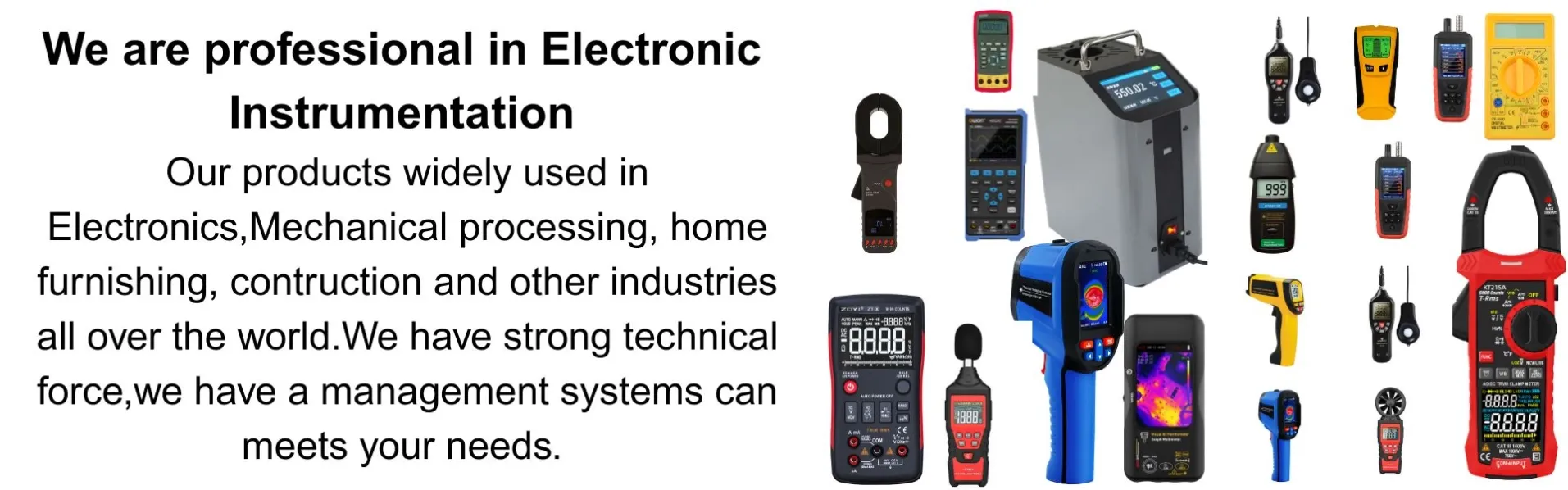
In the 2026 industrial landscape, non-contact temperature measurement has evolved from a luxury to a safety standard. Whether you are managing EV battery thermal stability, HVAC efficiency, or predictive electrical maintenance, choosing between an Infrared (IR) Thermometer and a Thermal Imaging Camera is a critical decision for your toolkit and your budget.
While both tools detect heat without contact, they serve vastly different roles in a professional’s workflow. This guide breaks down the technology, the applications, and the ROI for each.
What Is an Infrared Thermometer? (The Point-and-Shoot Essential)
An infrared thermometer, often called a laser thermometer, measures the average temperature of a single spot. It detects infrared radiation and converts it into a numerical value instantly.
Best For:Rapid, repetitive checks where the target location is precisely known.
2026 Use Cases: Quick HVAC vent checks, engine block diagnostics, and food safety monitoring.
The Advantage:It is highly portable, budget-friendly, and requires zero training to operate.
What Is a Thermal Imaging Camera? (The "Visual Diagnostic" Powerhouse)
Unlike a thermometer that gives you a number, a thermal camera gives you a picture. It uses thousands of sensors to capture a full heat map, allowing you to see temperature distribution across an entire surface.
Best For: Identifying hidden hotspots, insulation leaks, and complex electrical faults.
2026 Use Cases:EV battery pack inspection, building energy audits, and large-scale industrial predictive maintenance.
The Advantage: It reveals "invisible" problems that a single-point thermometer would likely miss.
Key Differences: A 2026 Comparison for Wholesalers
Feature | Infrared Thermometer | Thermal Imaging Camera |
Data Output | Single numerical value (Point) | Full visual heat map (Thousands of points) |
| Visualization | None (Laser pointer only) | High-resolution thermal image |
| Speed of Inspection | Slow for large areas (Point by point) | Instant (Scans entire scenes) |
| Hidden Fault Detection | Low (Must know where to point) | High (Hotspots "pop out" visually) |
| 2026 Market Trend| High-volume, low-margin essential | High-value, high-margin diagnostic tool |
When Should You Choose an Infrared Thermometer?
The IR thermometer remains the "first line of defense." It is the ideal choice when: 1. The target is easily accessible: You know exactly where the heat source should be.
2. Budget is a priority:You need to equip a large team with basic, reliable tools.
3. Simple Pass/Fail checks:You only need to know if a specific component is over a certain temperature.
When Should You Upgrade to a Thermal Camera?
In 2026, as systems become more complex (especially in Renewable Energy and Smart Buildings), thermal cameras are becoming the industry standard. Choose a thermal camera when:
1. Safety is critical: You need to scan high-voltage panels from a safe distance without missing a single loose connection.
2. Time is money: You need to inspect a 50-meter warehouse wall for insulation gaps in seconds, not hours.
3. Professional Reporting:You need to provide visual proof of a fault (or a repair) to a client or insurance company.
The Trader’s Perspective: Which One is Better for Your Inventory?
As a specialized trading partner, we’ve audited the top 2026 manufacturers to ensure our clients get the best of both worlds.
For Hardware Wholesalers: We recommend stocking a high volume of our 2026-series IR Thermometers—they are the "bread and butter" of every tool shop.
For Industrial & Electrical Suppliers: Our High-Resolution Thermal Cameras offer the advanced diagnostic capabilities that modern contractors are now demanding.
The choice between an infrared thermometer vs. thermal camera isn't about which tool is "better," but which tool is right for the job. In 2026, a professional toolkit often requires both: one for quick spot-checks and the other for deep, visual diagnostics.
Looking to update your 2026-2027 product catalog?
As your trusted sourcing partner, we provide certified, high-performance thermal tools with full QC backing.