
Where Is Thermal Imaging Most Useful in Data Centre Maintenance?
Learn where thermal imaging helps data centre maintenance teams inspect electrical and cooling systems, and why thermal anomalies need further investigation.
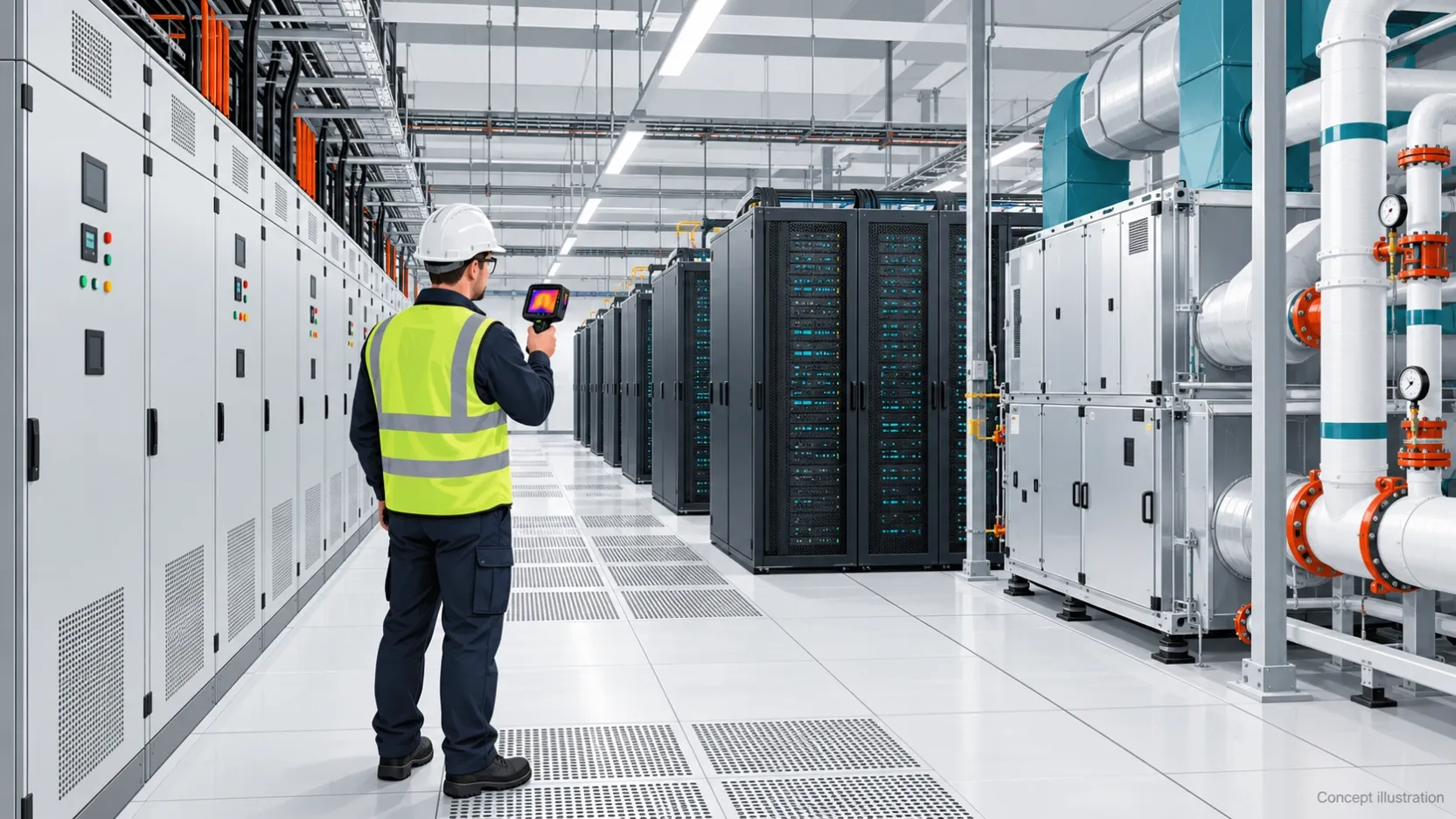
Thermal imaging is most useful when maintenance teams need to locate unusual surface-temperature patterns, compare accessible components and decide where further investigation is needed.
In a data centre, that makes it relevant to electrical distribution, cooling equipment and repeatable inspection routes. However, a thermal image alone cannot establish whether equipment has failed, identify every fault or confirm that an installation is safe.
1. Electrical Systems: Identify Connections That Need Investigation
Switchgear, power distribution units, UPS equipment and associated electrical connections are relevant inspection targets where approved access permits observation. FLIR identifies these systems among its data-centre thermal inspection applications.
An unusually warm connection can justify further investigation. It does not, by itself, prove that the connection is loose. Electrical loading, contact resistance and differences between operating conditions can influence the pattern.
Compare like-for-like components under comparable conditions, and record the load where available. Fluke electrical inspection guidance includes electrical-load measurement as part of diagnosis. A normal-looking image is not a certificate of electrical safety. Inaccessible components and faults that produce no detectable thermal signature remain outside what the image establishes.
2. Cooling Equipment: Locate Patterns, Then Check the Cause
Thermal imaging can support inspection of accessible cooling-system components and surface-temperature distributions around racks. Its value is in locating differences that deserve closer examination, rather than diagnosing cooling performance from colour alone.
For example, an unexpectedly warm area may prompt checks of operating conditions, cooling controls or air delivery. These are possible investigation paths, not conclusions established by the image.
A conventional thermal camera does not directly measure room airflow or supply-air temperature. Appropriate air-temperature, airflow, pressure or other measurements may be needed to answer the actual cooling question.
3. Motors and Mechanical Equipment: Compare Operating Conditions
Accessible motor and pump housings can be included in a maintenance route. Comparing their thermal patterns with a documented baseline may help identify changes worth investigating.
Interpretation still requires context. A warmer housing may reflect a different workload or cooling condition rather than a failed component. Surface reflections can also mislead the observer, particularly on low-emissivity materials. Thermal observations should be considered alongside operating data and additional checks selected by qualified maintenance personnel.
4. Routine Inspections: Make Results Comparable
A useful inspection programme produces records that another engineer can understand. Simply collecting colourful images is not enough. Use this suggested recording checklist:
- Asset ID and exact inspection point: identify what was inspected.
- Date, operating state and available load data: provide context for comparisons.
- Viewing position and relevant camera settings: help explain measurement differences.
- Thermal image and visible reference: connect the pattern to the physical asset.
- Observed anomaly and measurement limitations: separate evidence from interpretation.
- Follow-up action and responsible person: turn the observation into a maintenance task.
Compare recorded temperatures and conditions, not just colours. Display settings can make two images look different without establishing an equivalent change in the equipment.
What Can an Image Support, and What Needs More Evidence?
The following are hypothetical interpretation examples, not reports from customer inspections.
- One connection appears warmer than comparable connections: review load, surface conditions and approved electrical checks. Do not conclude that the connection is definitely loose.
- A rack surface shows an unusual warm region: check relevant equipment and cooling data. Do not conclude that the cooling unit has failed.
- A motor housing differs from its baseline: compare operating conditions and investigate further. Do not conclude that a bearing must be replaced.
- No obvious thermal anomaly appears: record the inspection scope and limitations. Do not conclude that all equipment is healthy.
Choose the Camera Around the Inspection Route
Before selecting a camera, define the smallest target, safe working distance, expected temperatures and required reporting workflow. Check whether the exact model provides the necessary focus, measurement controls and saved-data functions.
Thermal imaging does not see through an ordinary closed metal cabinet. Any access to hazardous equipment must follow the site approved procedures and be handled by qualified personnel. Non-contact measurement does not remove electrical or arc-flash hazards.
Frequently Asked Questions
Does a hot spot prove that equipment is faulty?
No. It identifies a thermal pattern to investigate. Loading, surface properties, reflections and operating conditions can affect the result. Confirm the cause with appropriate checks before deciding on corrective work.
Can a thermal camera replace airflow or air-temperature measurements?
No. A conventional camera measures radiation from surfaces in its view, not room airflow. Use measurements suited to the cooling-system question.
Should every warm component be treated with the same urgency?
No. Assessment depends on the asset, operating conditions, comparison data and site maintenance criteria. This article does not establish universal alarm temperatures or repair thresholds.
The practical value of thermal imaging is to help maintenance teams decide where to look next. It complements electrical measurements, cooling-system data and engineering judgement; it does not replace them.
When discussing a camera with ZYD, describe the assets to be inspected, access restrictions, working distance and documentation needs so that model suitability can be evaluated against the task.