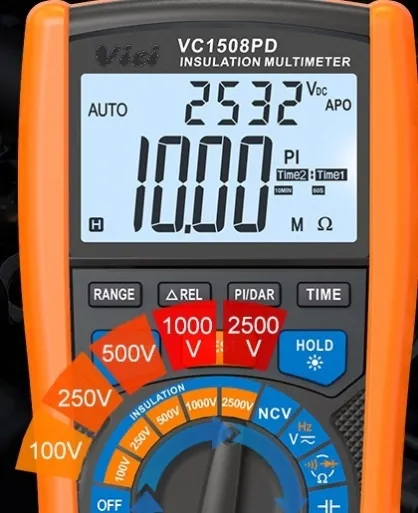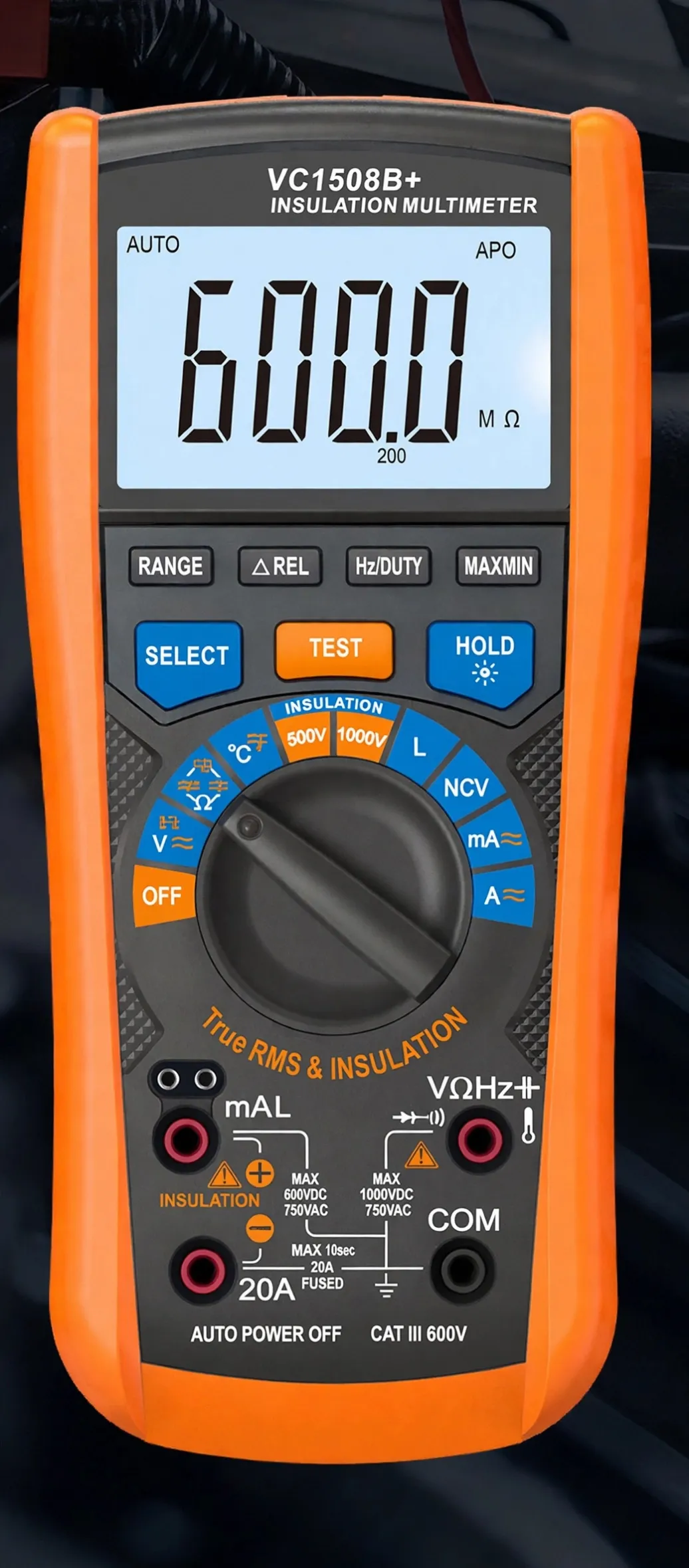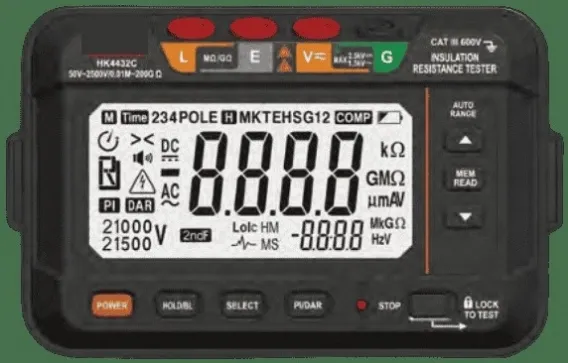
Insulation Resistance Testers
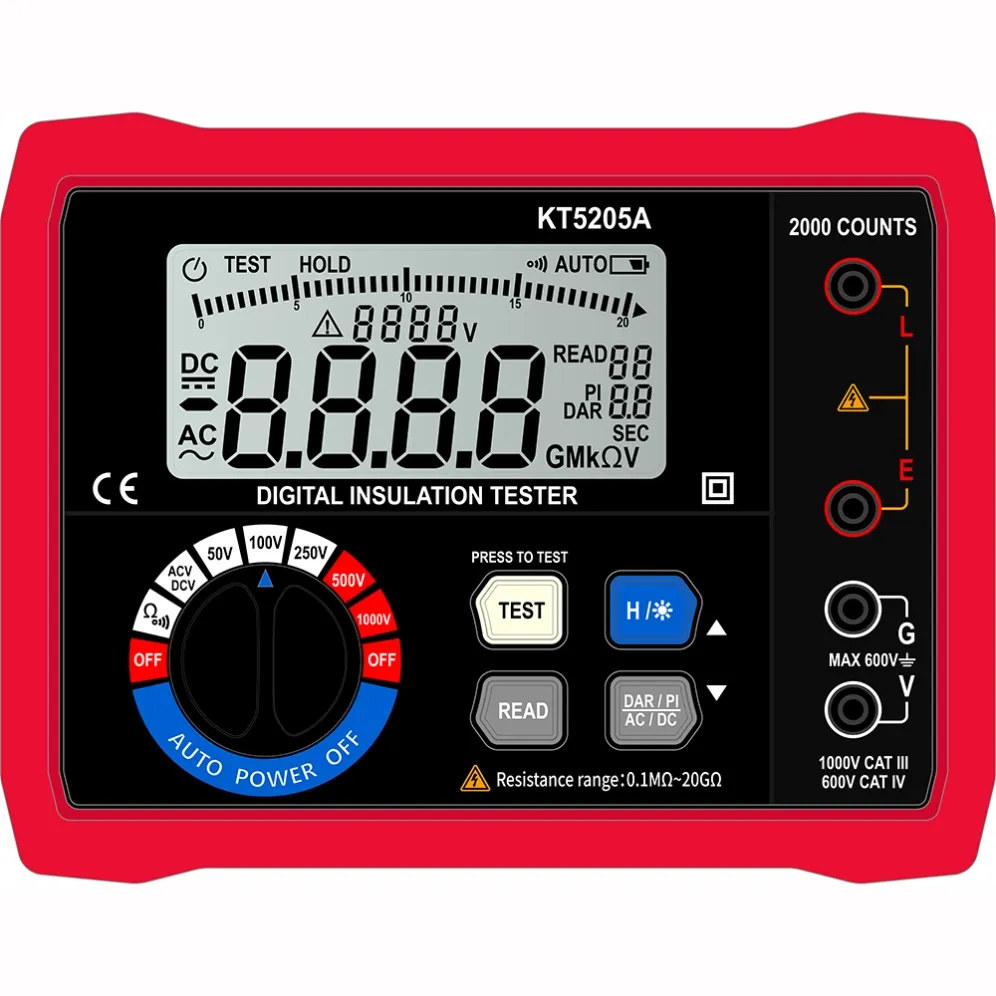
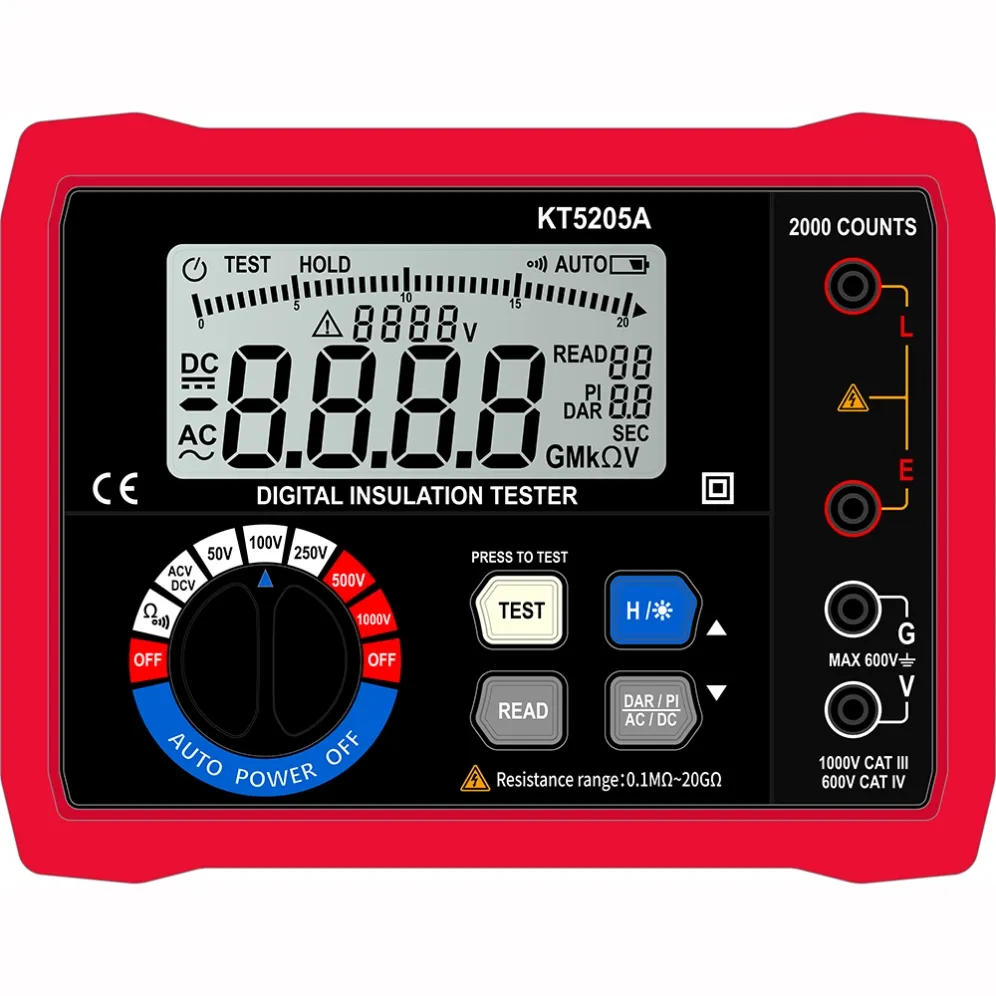
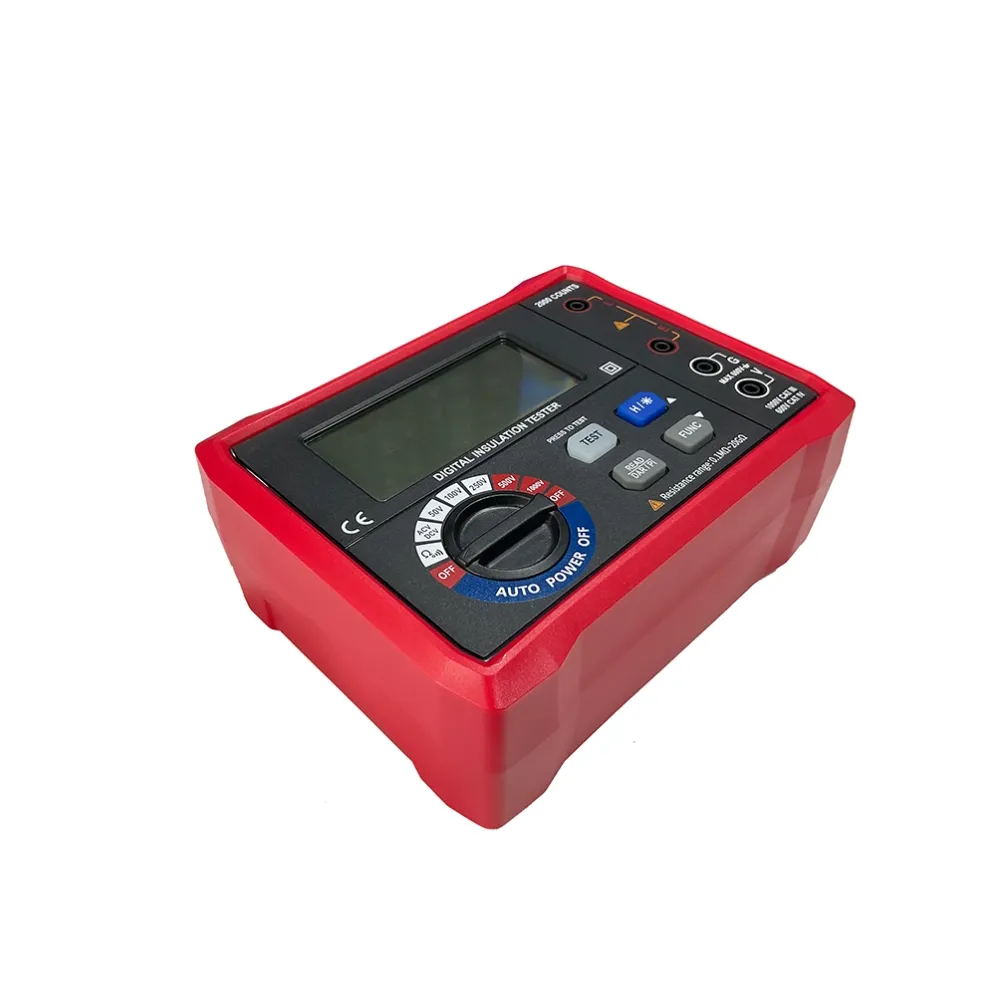
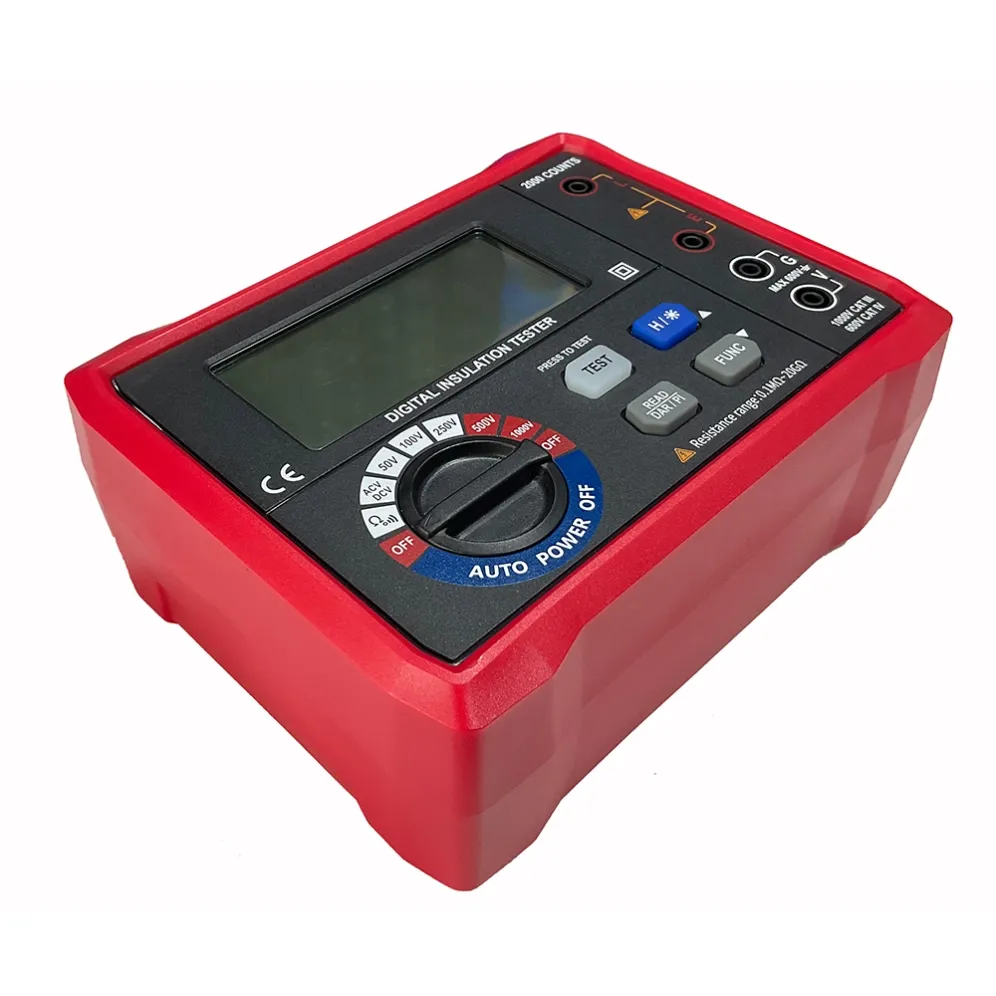
2026 New KT5205A Automatic Range Megohm Meter 1000V 20Gohm Digital Insulation Resistance Tester
KT5205A digital insulation resistance tester with up to 1000 V test voltage, 0.1 MOhm to 20 GOhm automatic range, and CAT III 1000 V / CAT IV 600 V safety rating. Request a sample, datasheet, or OEM quote from ZYD.
2026 New KT5205A Automatic Range Megohm Meter 1000V 20Gohm Digital Insulation Resistance Tester
The KT5205A is a digital insulation resistance tester for maintenance teams, electrical contractors, motor repair shops, and distributors who need controlled DC test voltage up to 1000 V and a resistance range up to 20 GOhm.
It is built for insulation resistance checks where a normal multimeter cannot provide a meaningful result: motor windings, cables, switchgear, transformers, and other equipment where insulation leakage must be assessed at a defined test voltage.
Why 1000V and 20Gohm matter
A multimeter uses a low test voltage and is intended for resistance, continuity, and voltage measurements. It cannot apply the controlled higher DC voltage that an insulation test requires. The KT5205A provides 1000 V test capability and a 0.1 MOhm to 20 GOhm range, so it can be used for insulation resistance checks across a broad set of equipment.
The 20 GOhm upper range is useful for detecting very high insulation resistance, while the automatic range function reduces manual range switching during routine testing.
Do not treat the 1000 V rating as a universal pass/fail threshold. The correct test voltage depends on the equipment, its rated voltage, the applicable standard, and the manufacturer's instructions.
Key specifications
Item | Specification |
|---|---|
Model | KT5205A |
Test voltage | Up to 1000 V DC |
Insulation resistance range | 0.1 MOhm to 20 GOhm |
Range mode | Automatic range |
Display | Digital LCD |
Safety rating | CAT III 1000 V / CAT IV 600 V |
For the exact accuracy expression, available test-voltage steps, power supply, dimensions, weight, operating environment and current package configuration, request the current KT5205A datasheet from ZYD.
Typical applications
- Motor windings: insulation resistance checks before and after maintenance, rewinding, or storage.
- Cables and wiring: insulation resistance between conductors and earth where the cable rating and test voltage are compatible.
- Switchgear and distribution equipment: insulation checks as part of preventive maintenance.
- Transformers and industrial equipment: insulation resistance trending where the test voltage is appropriate for the equipment.
- HVAC and building maintenance: insulation checks on motors, pumps, and associated electrical circuits.
For photovoltaic (PV) or other DC systems, confirm the tester's DC rating, test voltage range, and applicable safety standard with ZYD before specifying the model. Do not assume that a 1000 V insulation tester is automatically suitable for every PV configuration.
KT5205A vs a multimeter
A multimeter is the right tool for voltage, resistance, continuity, and low-voltage checks. It is not a substitute for an insulation resistance tester, because it does not apply the controlled higher test voltage needed to assess insulation leakage.
Use the multimeter for voltage presence and polarity, continuity, low resistance, and component-level checks. Use the KT5205A for insulation resistance between windings and earth, cable insulation checks at a defined test voltage, and preventive-maintenance records and trend comparison.
What to check before ordering
- Test voltage accuracy at each available step.
- Resistance accuracy at low, mid, and high ranges.
- Repeatability on a stable reference resistor.
- Lead condition and probe insulation.
- Display readability and range switching.
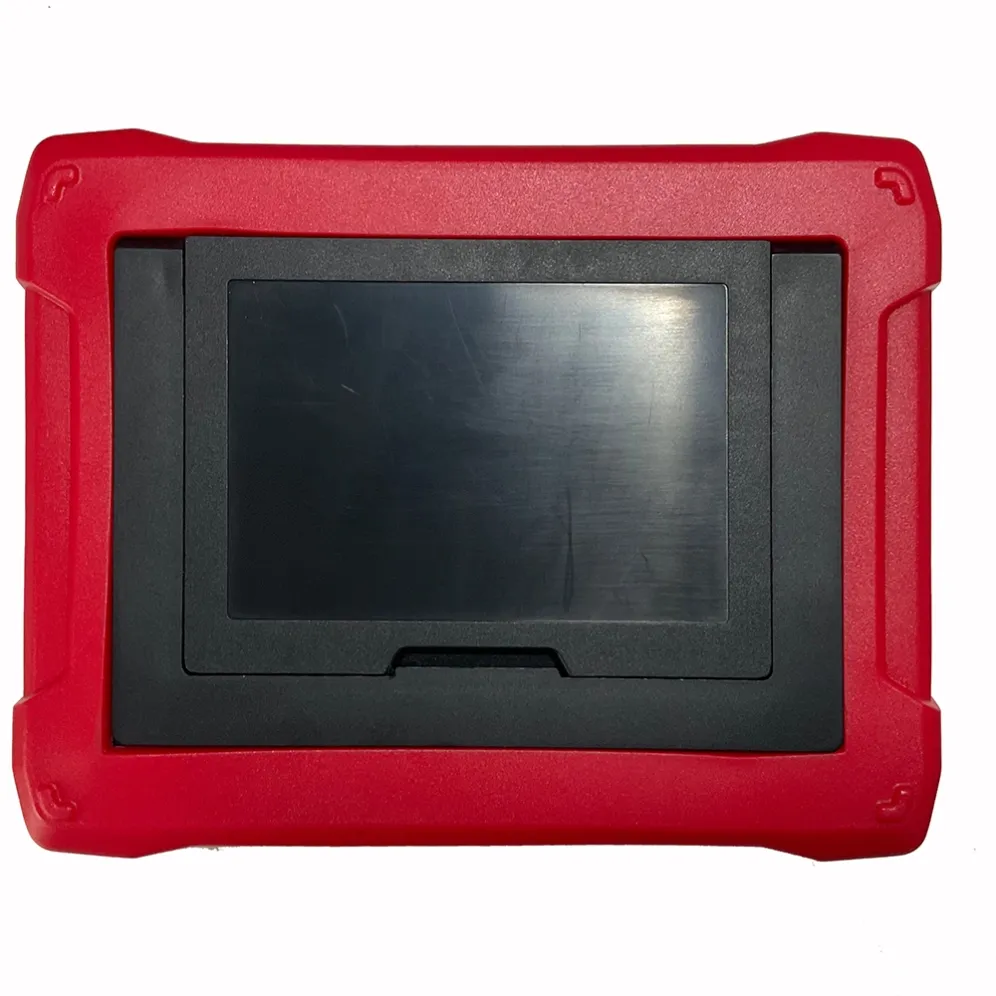
- Battery compartment, fuse access, and enclosure condition.
- The exact accessories, manual revision, and package configuration.
- The safety markings and available documentation for the SKU.
For batch QC, keep a golden sample and record the model, hardware revision, test points, readings, accessories, and packaging.
FAQ
Can the KT5205A test motor insulation?
It can be used for insulation resistance checks on motors where the test voltage is appropriate for the winding and the applicable procedure. Confirm the correct test voltage and acceptance criteria with the equipment manufacturer or your maintenance standard.
Can it replace a multimeter?
No. It is an insulation resistance tester. Keep a multimeter for voltage, continuity, and low-voltage resistance checks.
What is the difference between 1000 V and 20 GOhm?
1000 V is the test voltage capability; 20 GOhm is the upper resistance range. They describe different parts of the measurement, and both matter for the application.
Is it suitable for PV systems?
Confirm the DC rating, test voltage, and safety standard with ZYD before specifying it for PV. Do not assume suitability from the 1000 V label alone.
Request a sample, datasheet or OEM quote
Share your target application, test voltage, market, sample quantity, and packaging or private-label requirements. ZYD can confirm the KT5205A configuration, current specification sheet, and available documentation for your order.