Sep 11, 2026Buying Guides
How to Choose a Refrigerant Leak Detector for HVAC/R Service
Learn how to choose a refrigerant leak detector by sensor type, refrigerant compatibility, sensitivity, field workflow and ownership cost.
A refrigerant leak detector earns its place in a service kit when it shortens the time between “the system is losing charge” and “the leak is here.” For distributors and private-label buyers, however, the decision is more demanding than choosing the lowest sensitivity number on a specification sheet.
The right detector must respond reliably to the refrigerants used in the target market, recover quickly after an alarm, remain stable around oil and moisture, and stay economical after sensors, filters and batteries are included. This guide explains how to compare those factors without turning the specification sheet into a feature-counting exercise.
Quick answer: what should buyers check first?
Start with the exact refrigerants your customers service. Then compare sensor technology, minimum detectable leak rate, response and recovery behavior, zeroing modes, probe design, alarm feedback and long-term maintenance cost. A detector should never be described as “universal” unless its documentation lists the relevant refrigerants or sensor modules.
- Refrigerant list: Check exact gases and blends, not only broad labels such as HFC or HFO.
- A2L suitability: Confirm the model is specifically documented for the A2L refrigerants sold in the market.
- Sensitivity: Compare values in g/year or oz/year under a stated test method and test gas.
- Response and recovery: The instrument must alarm quickly and clear fast enough to pinpoint the source.
- Zero control: Automatic zeroing is convenient; manual zeroing gives more control in contaminated areas.
- Field design: Look at probe length, display visibility, alarms, battery runtime and replaceable tips.
- Documentation: The manual should state compatibility, operating procedure, functional checks and maintenance.
What a refrigerant leak detector can—and cannot—tell you
An electronic refrigerant leak detector samples air near a suspected leak and alerts the technician when the target gas concentration rises. It is primarily a locating tool. The bar graph, beeper rate or numerical scale on many handheld detectors shows a relative change that helps the user follow the concentration gradient toward the source.
That indication should not automatically be treated as a calibrated leak-rate measurement. Unless the manufacturer explicitly specifies quantitative accuracy for that mode, a display value is best used for locating and comparing signals. The final repair should be confirmed using the procedure required by the equipment manufacturer, customer and local regulations.
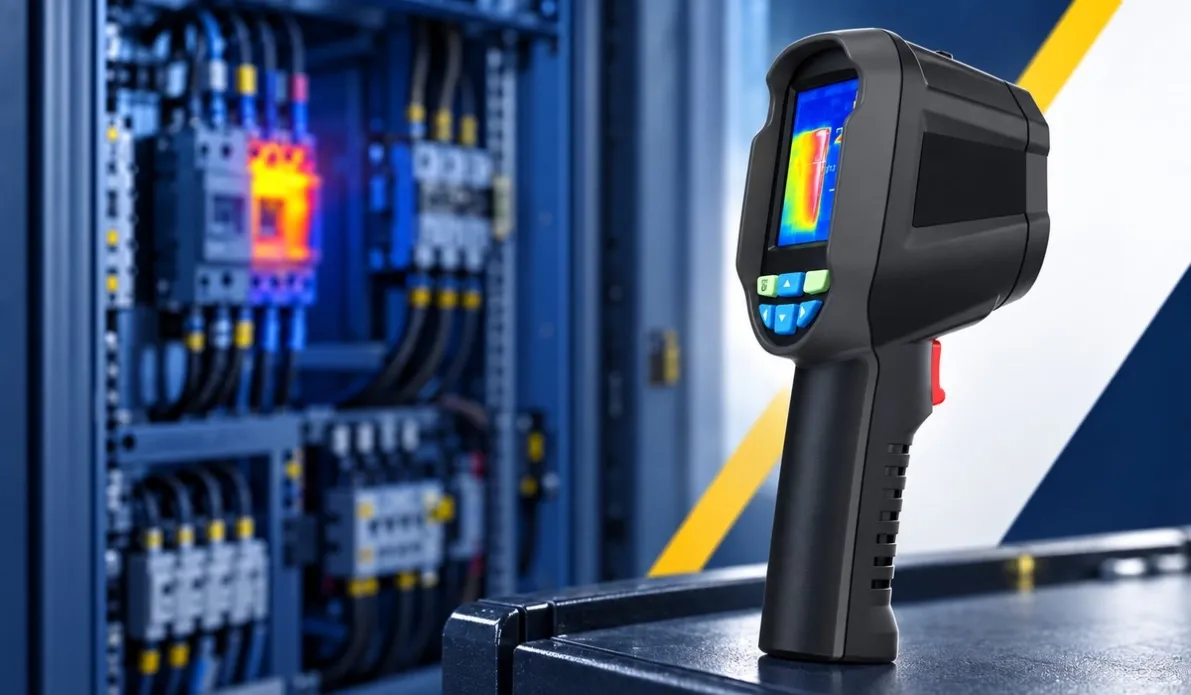
A refrigerant detector also does not replace a refrigerant identifier, oxygen-deficiency monitor or combustible-gas detector. Temperature tools can reveal abnormal system behavior, but they do not identify escaping refrigerant.
Related ZYD guide — Infrared Thermometer vs. Thermal Camera:
https://www.zydhardware.com/posts/infrared-thermometer-vs-thermal-camera-the-2026-professional-guide-for-industrial-diagnostics
Refrigerant leak detection methods compared
Heated-diode and semiconductor detectors
These detectors are widely used for routine HVAC/R service because they can offer strong sensitivity at a practical price. Their response and sensor life depend on the sensing element, gas exposure and contamination. Filters and tips are not minor accessories: they help protect the sensor from oil, moisture and dust.
Infrared detectors
Infrared designs identify refrigerant through its absorption of infrared energy. On supported gases they are valued for stable performance and long sensor life. They can be a strong fit for full-time service technicians, but the higher initial price must be justified by workload, sensor longevity and lower false-alarm burden. “Infrared” still does not mean “detects every gas.”
Alternative and confirmation methods
Ultrasonic instruments, bubble solutions, UV dye and pressure testing each solve a different part of the job. A common workflow is to use an electronic detector for the initial sweep and a suitable bubble solution to confirm an exposed joint. Buyers should think in terms of a workflow, not a single tool that replaces every method.
1. Verify exact refrigerant compatibility
Compatibility is the first purchasing filter. A detector that performs well on R-134a may not provide the same response on every HFO blend, carbon dioxide, ammonia, hydrocarbon refrigerant or sulfur hexafluoride. Even when two products use similar sensor technology, their approved gas lists can differ.
Ask the supplier for a current compatibility table and match it to the end market. Residential and light-commercial HVAC buyers need the common legacy and current refrigerants used locally. Automotive buyers should check the refrigerants used by the vehicle fleet. Commercial refrigeration buyers need the exact HFC, HFO and blended refrigerants found in customer equipment. Special gases such as SF6, ammonia or CO2 require explicit model documentation.
ASHRAE Standard 34 assigns refrigerant designations and safety classifications using toxicity and flammability data. That classification is important for service procedures, but it does not prove that a particular detector is suitable. The detector manufacturer must still document the exact refrigerant or sensor configuration.
2. Read sensitivity specifications correctly
Minimum sensitivity is commonly stated as grams per year (g/year) or ounces per year (oz/year). It describes the smallest standardized leak the detector can identify under defined conditions. It is not the same as measurement accuracy, and it should not be compared without checking the test gas and test method.
For example, one manufacturer may publish a sensitivity value for R-134a under EN 14624. Another detector may quote a different gas, a stationary-tip test or an internal method. The lower number looks better, but the two claims are not necessarily equivalent.
Professional buyers should request four related specifications: minimum detectable leak rate; test refrigerant and test standard; typical response time; and typical recovery or clearing time. In field work, repeatability often matters more than an extreme laboratory sensitivity claim.
3. Evaluate field usability
A detector can be sensitive and still frustrate technicians. A flexible probe should reach evaporator corners, service valves, compressor compartments and automotive fittings without collapsing. Audible, visual and vibration indications help in noisy or poorly lit spaces. Multiple sensitivity levels make it easier to search on high sensitivity and pinpoint on a lower setting.
Automatic zeroing speeds up routine work, while manual zeroing gives technicians more control when the background concentration is already elevated. Also compare battery runtime, charging method, warm-up time, display visibility and how easily the probe tip and filter can be inspected or replaced.
4. Calculate total ownership cost
The purchase price is only the first line of the cost calculation. A lower-priced detector can become expensive if sensors are short-lived, proprietary filters are difficult to obtain or the battery cannot support a full working day.
For tenders and distributor programs, compare replacement sensor price, expected operating hours, filter and tip availability, battery policy, functional-check requirements, warranty handling and spare-part lead time. Private-label buyers should also confirm that the same sensor, firmware behavior and accessories can be maintained across production batches.
Match the detector to the application
Residential HVAC service usually prioritizes common local refrigerants, fast warm-up, simple alarms and a durable probe. Commercial HVAC/R buyers need broader documented compatibility, repeatability, high sensitivity and serviceable filters. Automotive buyers should confirm R-134a and R-1234yf separately. Industrial maintenance teams need gas-specific documentation, ruggedness and traceable procedures.
Wholesale and private-label buyers should add another layer: stable specifications, replacement parts, packaging quality, a market-specific manual and production quality-control records. A technically acceptable sample is not enough if later batches cannot be supported consistently.
A practical field workflow
- Confirm the refrigerant from the equipment label and verify detector compatibility.
- Inspect for oil staining, damaged tubing, loose valve caps and rubbed pipework.
- Check the filter and probe tip, power on in clean air, allow warm-up and run the manufacturer’s functional check.
- Reduce strong airflow where safe and avoid solvents or cleaners that may interfere with the sensor.
- Scan slowly and closely around joints, valves, coils, bends and compressor connections.
- Lower sensitivity if necessary, move away to let the sensor clear, then approach again from more than one direction.
- Confirm the location with an approved second method where appropriate, repair the system and retest.
Safety note: Refrigeration systems involve pressure, electrical hazards and refrigerants with different toxicity and flammability classifications. Work must follow the equipment manufacturer’s procedures, the detector manual and applicable local rules. In the United States, refrigerant handling and leak-repair work may also fall under EPA Section 608 requirements.
Common purchasing mistakes
- Buying by sensor label alone. Two “heated-diode” detectors can have different compatibility, response and sensor life.
- Assuming the smallest sensitivity number wins. Test method, refrigerant, recovery time and repeatability matter.
- Treating a relative display as a calibrated ppm or leak-rate measurement.
- Using one detector for unrelated gases without explicit documentation.
- Ignoring filters, tips and replacement sensors when calculating margin and ownership cost.
- Relying on a short sales-page claim instead of reviewing the manual.
Questions distributors should send to a supplier
- Which exact refrigerants and blends have been tested?
- Is A2L compatibility documented for the quoted model?
- What are the minimum sensitivity, test refrigerant and test method?
- What are the typical response and recovery times?
- How do automatic and manual zero modes behave?
- What is the expected sensor life, and what conditions shorten it?
- Are sensors, filters, tips and batteries replaceable and available?
- What functional check is required before use?
- Can the supplier provide OEM branding, packaging and a market-specific manual?
- Which specifications are verified during production quality control?
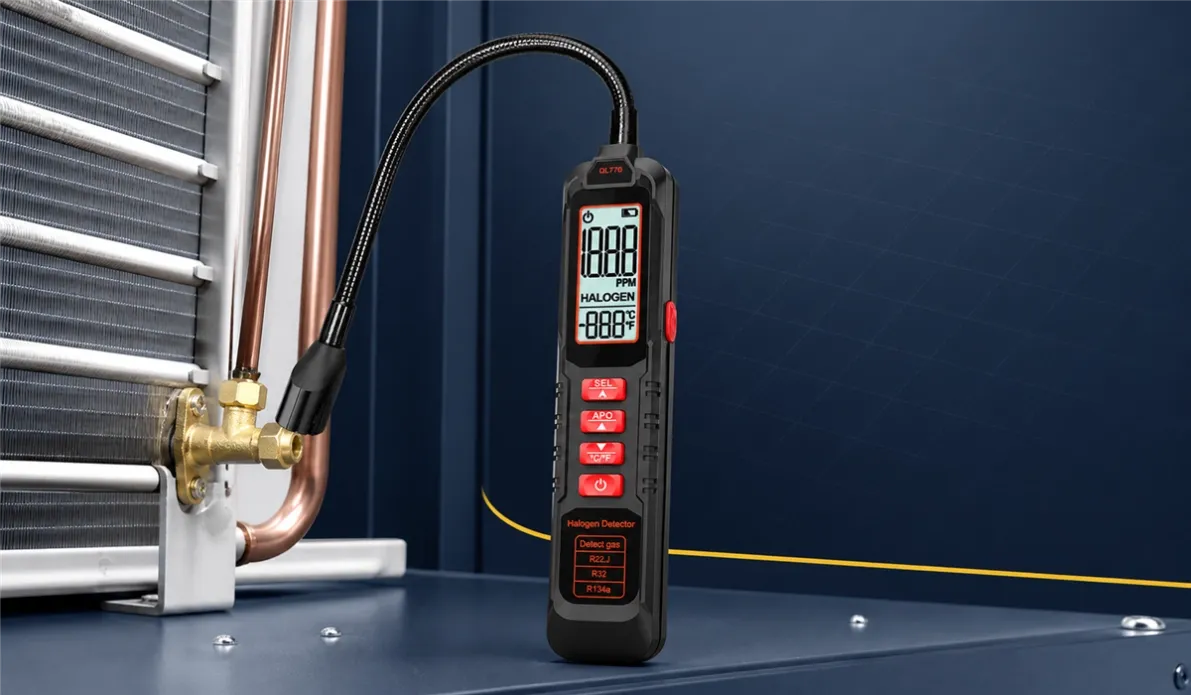
For buyers serving conventional air-conditioning applications, the ZYD ZL77/ZL77B is a handheld halogen refrigerant leak detector listed for R-22, R-410A and R-134a service. Always match the exact model documentation to the refrigerants and regulations in your destination market.
View the ZYD ZL77/ZL77B product:
https://www.zydhardware.com/products/zl77-zl77b-halogen-refrigerant-leak-detector-for-hvac-systems
Frequently asked questions
Q: Can one detector detect every refrigerant?
No. Compatibility depends on the sensor and the manufacturer’s validated gas list. CO2, hydrocarbons, ammonia and SF6 may require dedicated sensors or separate instruments.
Q: Will a halogen detector detect R-32?
Only if the exact model documentation lists R-32 and the required A2L suitability. Do not assume compatibility from the word “halogen” alone.
Q: Is infrared always better than heated diode?
No. Infrared detectors can offer long sensor life and stable performance, while heated-diode or semiconductor models may provide excellent sensitivity at a lower initial cost. The better choice depends on refrigerants, workload, maintenance and budget.
Q: Does a lower g/year rating guarantee better field performance?
Not by itself. Compare the test gas, test method, response time, recovery time and repeatability. Field contamination and airflow can affect results.
Q: Can soap bubbles replace an electronic detector?
Bubble solution is excellent for confirming an exposed suspect joint, but it is slow for searching a complete system and cannot reach hidden areas. The two methods work well together.
Build the range around real service work
If you are sourcing refrigerant leak detectors or other HVAC/R test instruments for wholesale, OEM or private-label programs, send ZYD the destination market, refrigerant list, required sensitivity, expected order volume and packaging needs. We can help narrow the model options before samples are evaluated.