
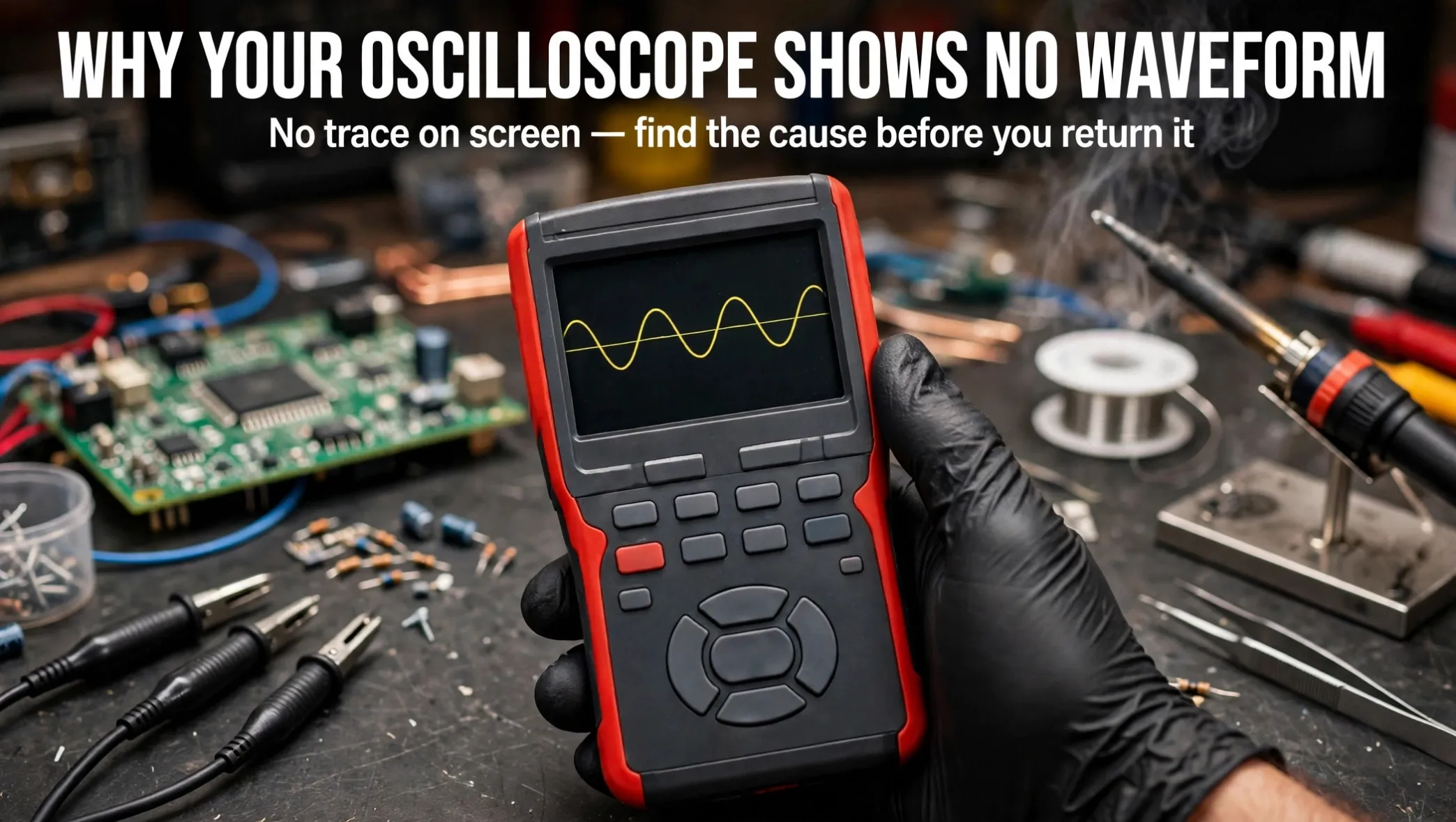
Why Your Oscilloscope Shows No Waveform (and How to Fix It)
Oscilloscope showing a flat line? The scope is rarely broken. Check the trigger, probe attenuation and scale first — this 5-minute checklist finds the signal.
TEST & MEASUREMENT
Explore practical buying guides, product comparisons, application tips, and technical insights for test and measurement professionals.
Oscilloscope showing a flat line? The scope is rarely broken. Check the trigger, probe attenuation and scale first — this 5-minute checklist finds the signal.
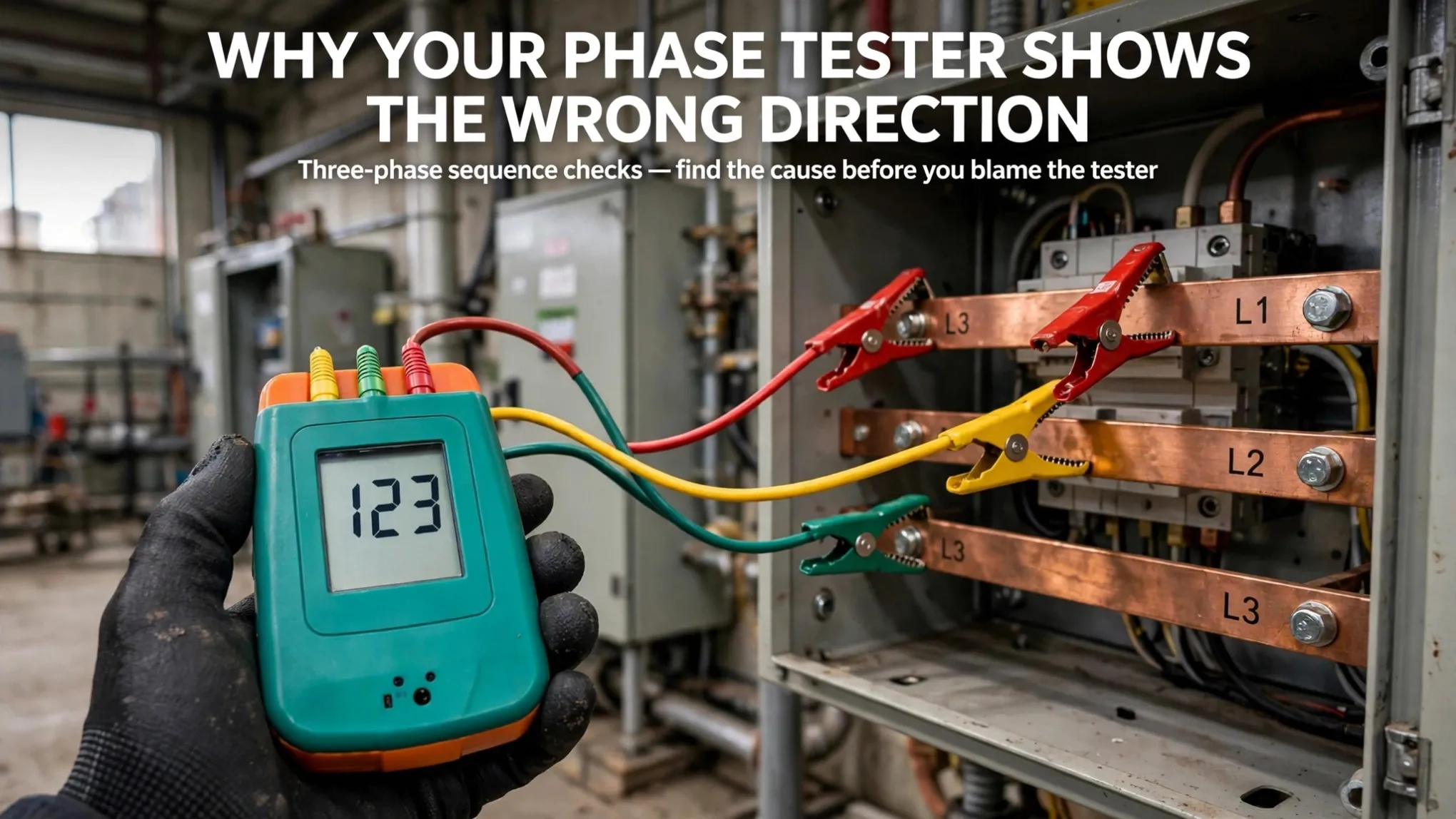
Phase rotation tester says reverse but the wiring looks right? Loose leads, a missing phase, or testing past a VFD are the usual causes — here's how to check.
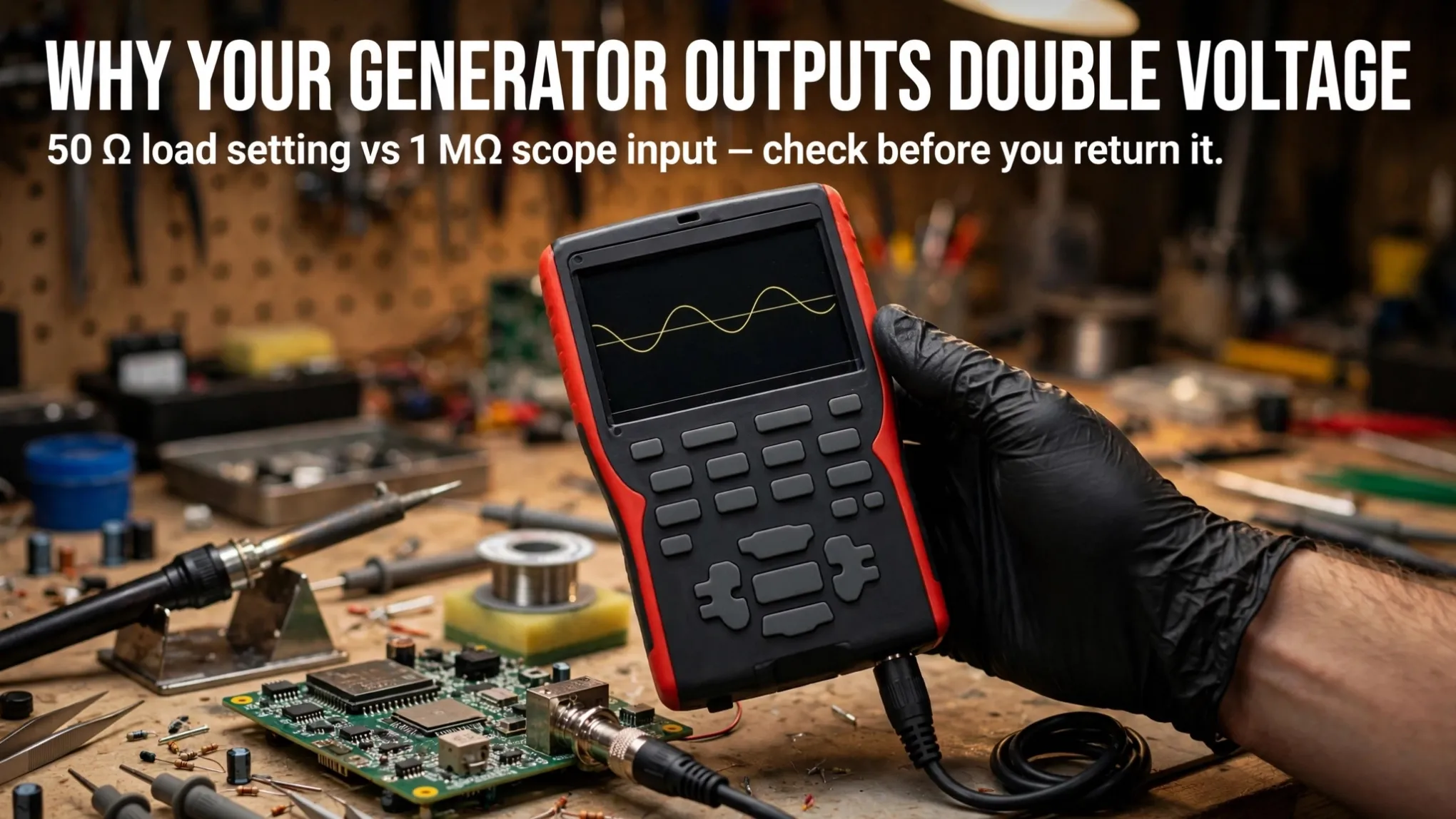
Set 2 Vpp but measure 4 Vpp? Your generator is not broken — it assumes a 50 Ω load. Learn why the voltage doubles on a scope and how to set the load right.
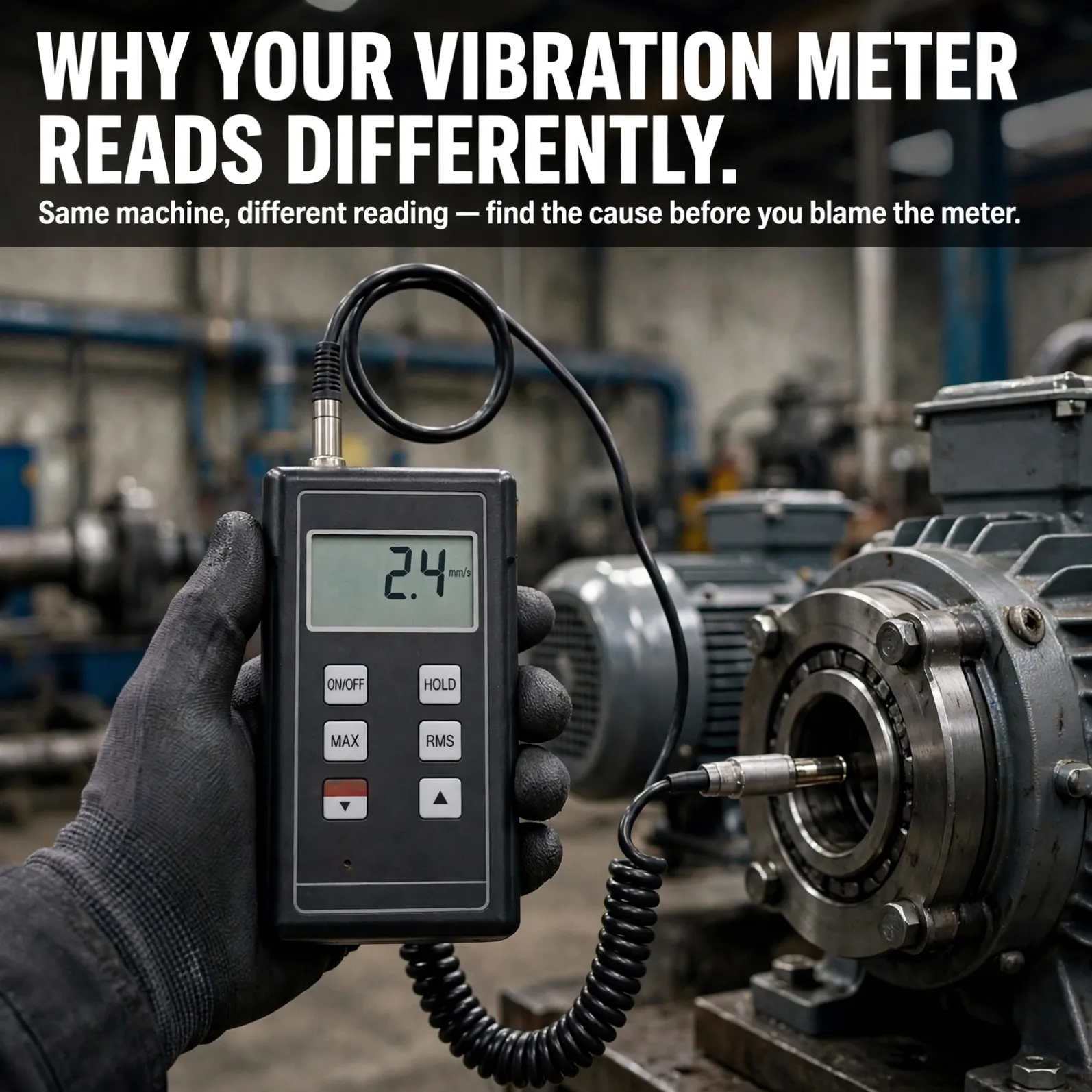
Same machine, different vibration readings? It is usually the spot, the mount or the machine condition — not a faulty meter. Six causes and a 5-minute check.
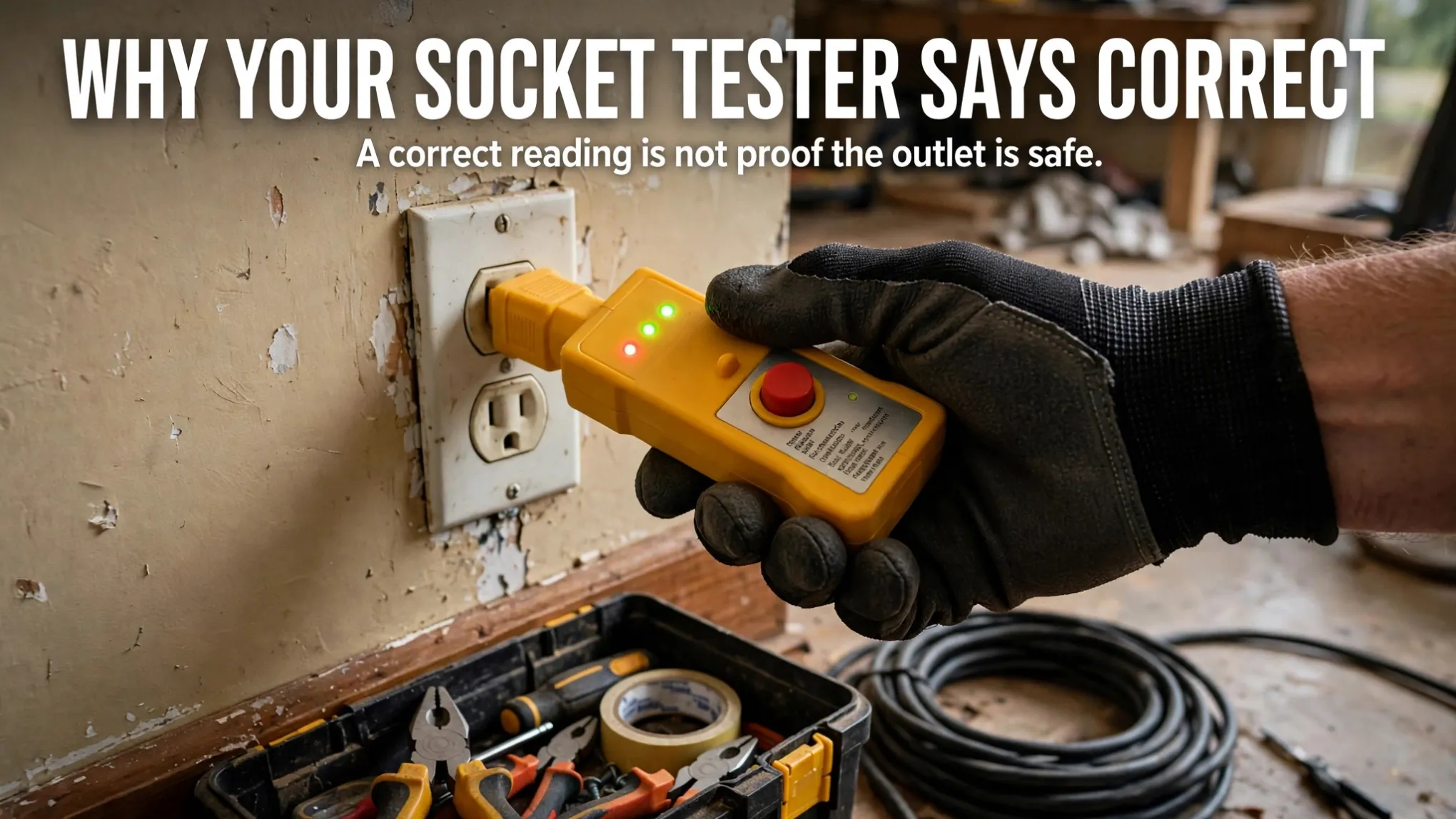
Your socket tester says "correct" — but the outlet may still be dangerous. Here are five faults a plug-in tester cannot see, and how to check for them.

Two humidity meters disagree in the same room? Learn why humidity meters read wrong — accuracy, placement, condensation and drift — and how to check yours.

Set 12 V but your bench power supply reads 8.5 V? It has probably switched to constant-current mode. Learn why voltage drops under load and how to fix it.
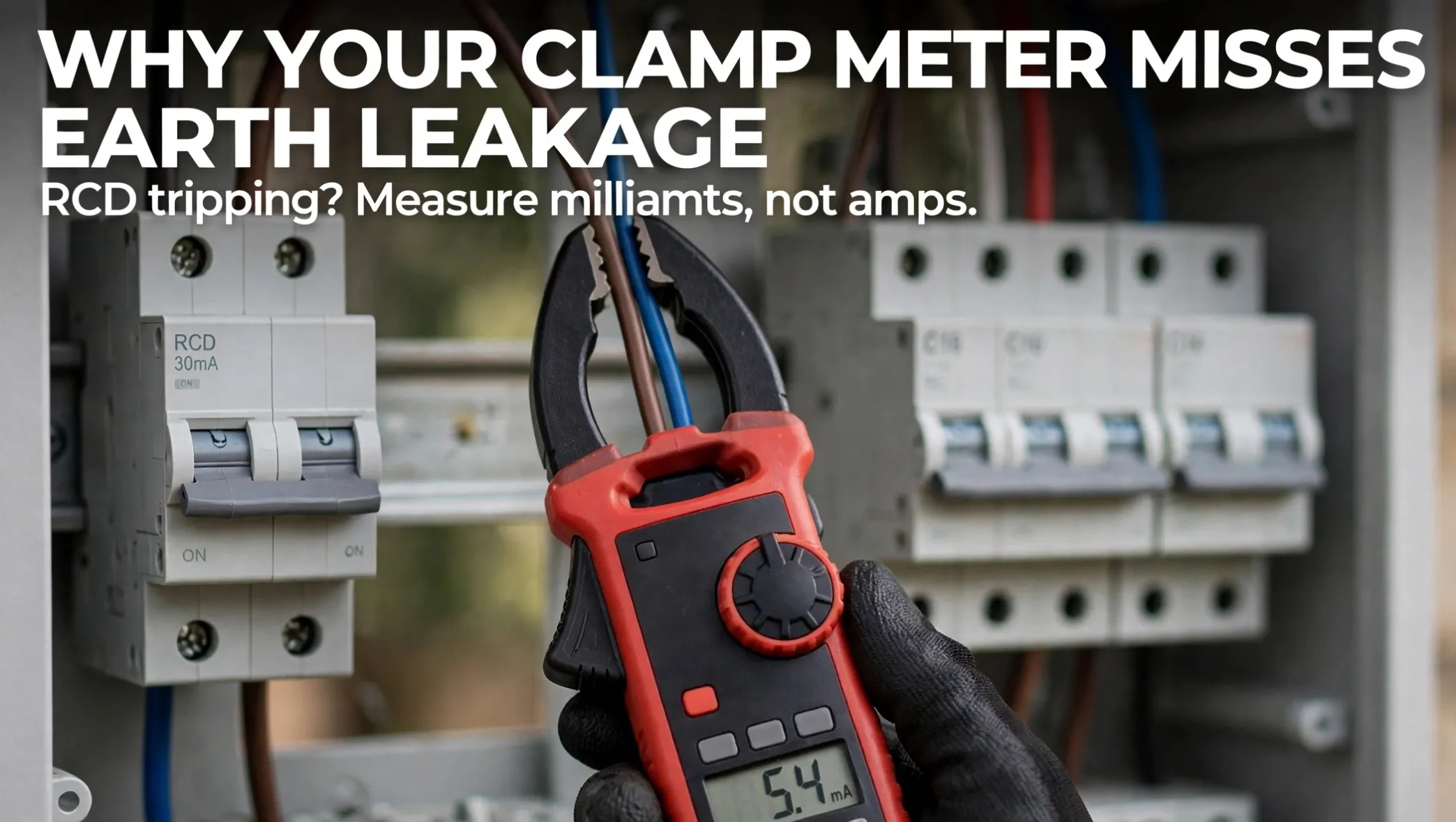
Your RCD keeps tripping but the clamp meter reads 0.00 A. A standard clamp cannot resolve the milliamps that trip it — differential leakage measurement can.

Wrong capacitor reading? In-circuit paths, residual charge, ESR and test frequency are the usual causes. This five-minute check usually finds the real one.

A multimeter fuse that keeps blowing is usually a setup mistake, not a faulty meter. The five common causes, how to replace the fuse safely, and how to stop it.