
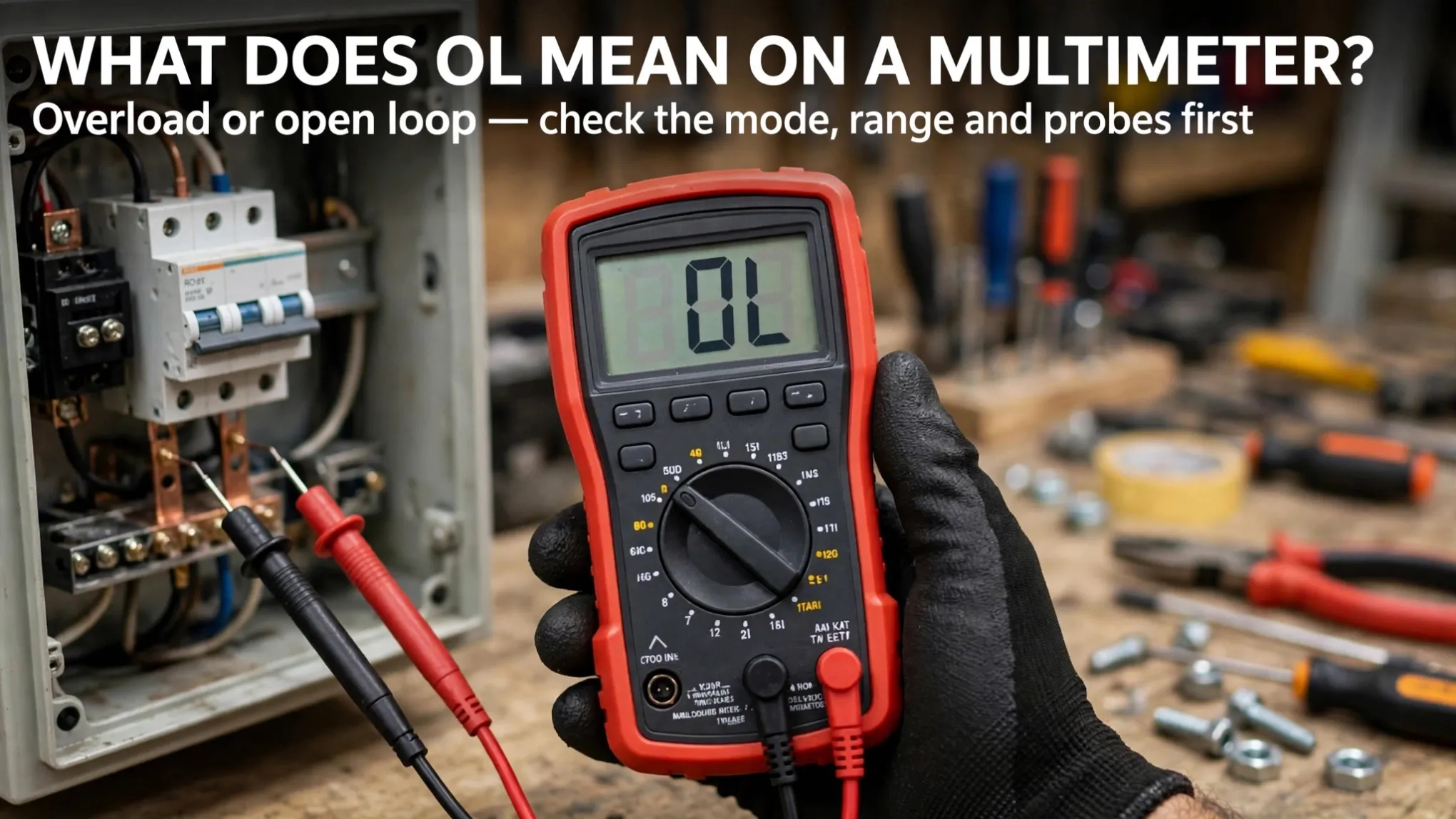
What Does OL Mean on a Multimeter? (And When to Worry)
OL on a multimeter means overload or open loop: the value is beyond the range, or there is no connection. What it means in each mode, and when it is a fault.
TEST & MEASUREMENT
Explore practical buying guides, product comparisons, application tips, and technical insights for test and measurement professionals.
OL on a multimeter means overload or open loop: the value is beyond the range, or there is no connection. What it means in each mode, and when it is a fault.
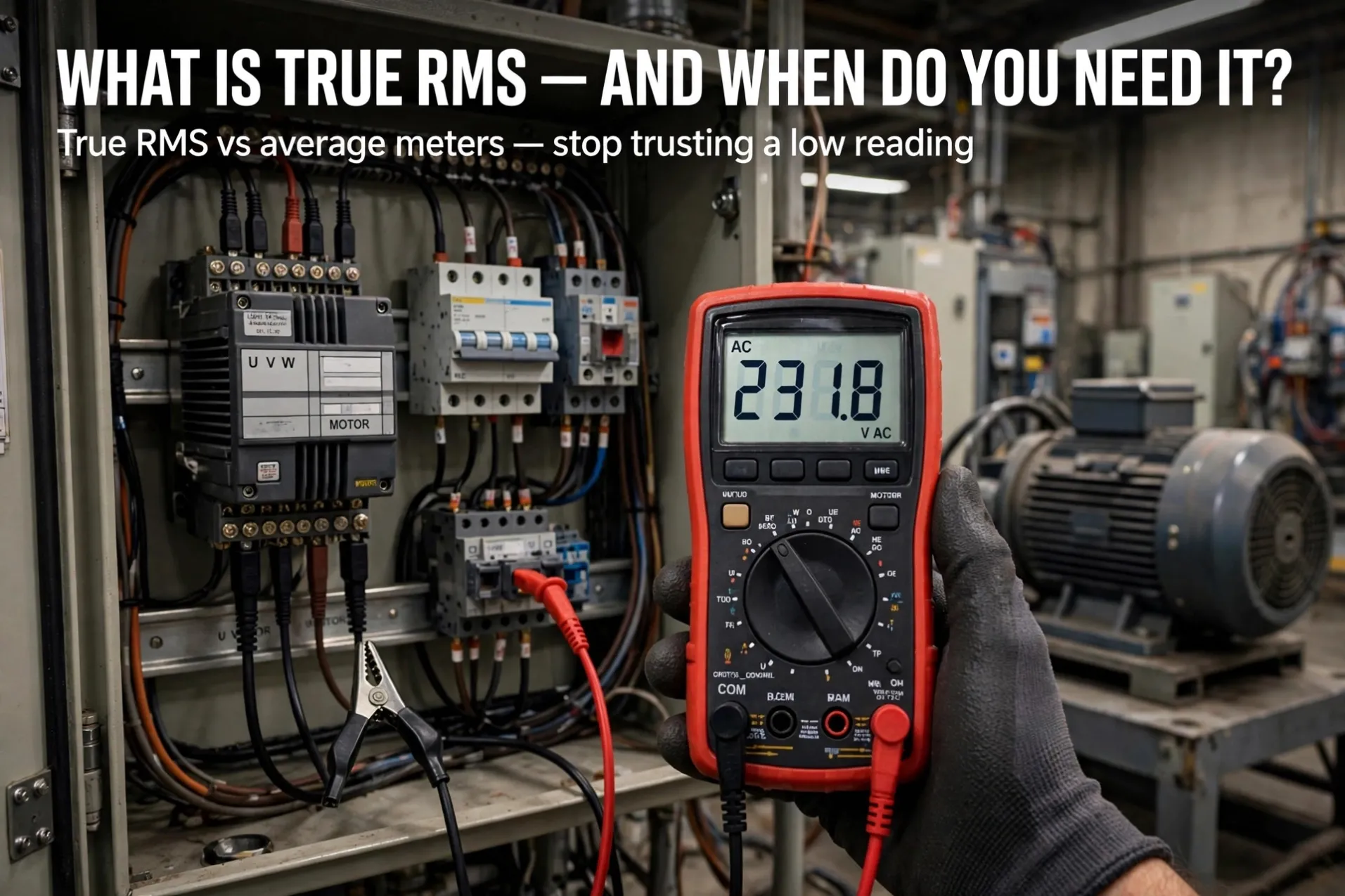
True RMS vs average-responding multimeters: when a standard meter reads 10-40% low, which loads need True RMS, and how to check a meter before you buy.
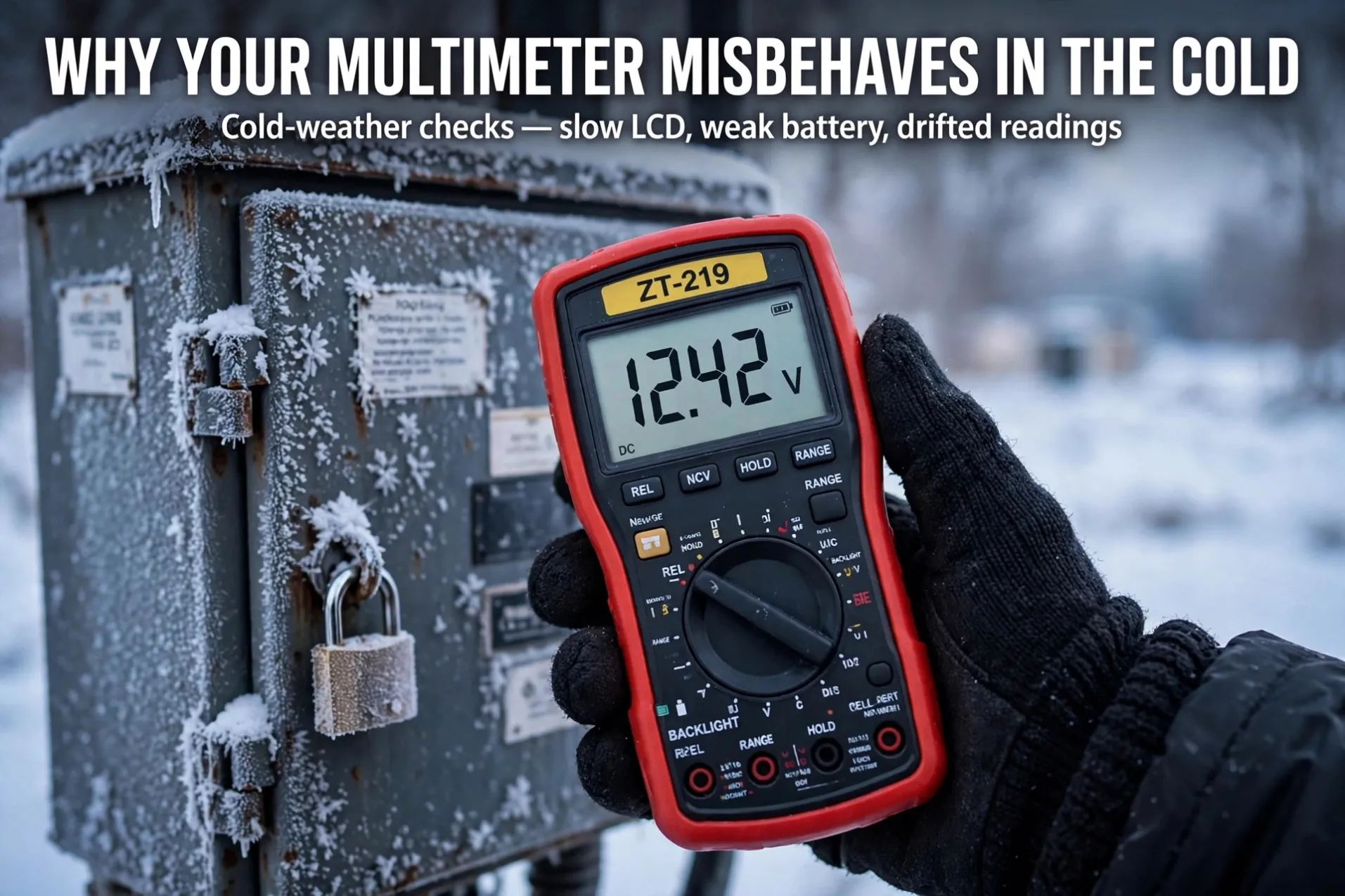
Cold slows a multimeter's LCD, drains its battery and pushes readings outside their accuracy. Learn what is normal, what is a fault, and how to stay accurate.

An EV charger that will not start is not always broken. Learn how an EVSE tester checks the earth, CP signal and RCD trip — and what to ask before you buy.

Multimeter reading keeps jumping? Low battery, loose leads, wrong range or interference are the usual causes. Use this five-minute check to find which it is.
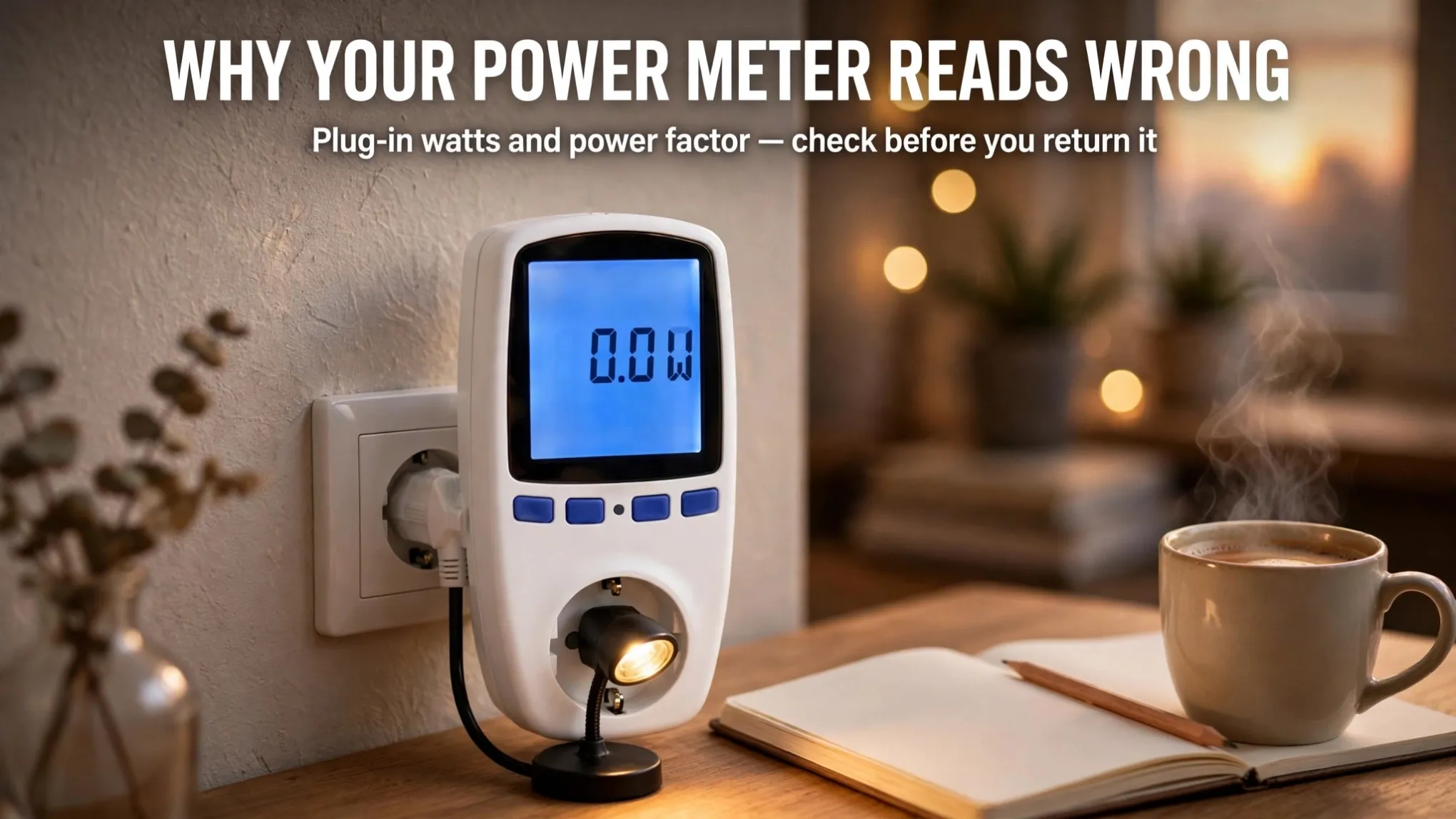
Plug-in power meter reads 0 watts on a 7W LED bulb? Power factor, low-power limits and distorted waveforms are usually the cause. Here is how to check yours.
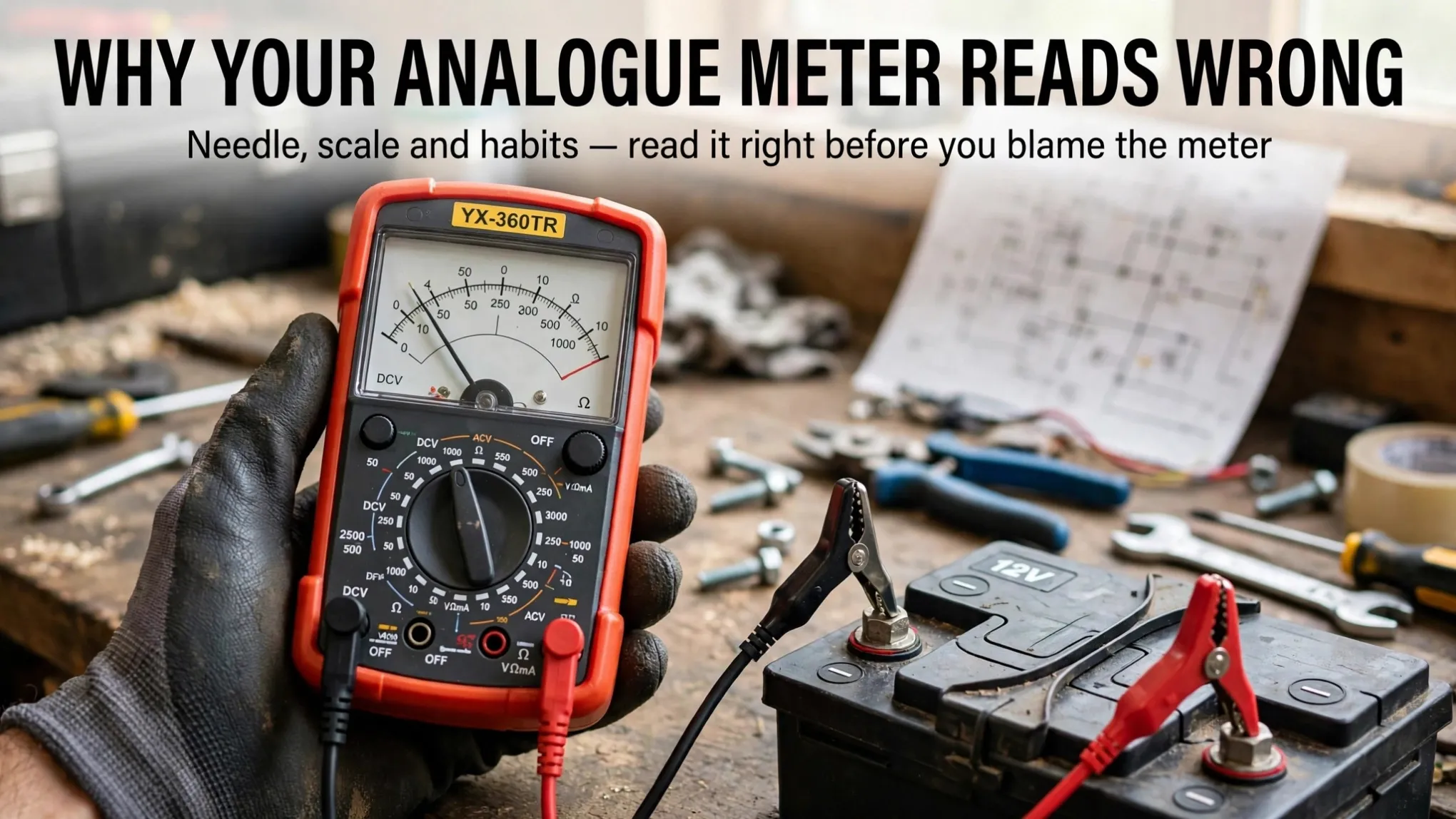
Your analogue multimeter reads wrong? Parallax, the wrong scale, a skipped zero-ohm adjustment and a weak battery cause most errors. Here is the quick fix.

Your Geiger counter reads 25 CPM one minute and 60 the next, in the same spot. Learn why CPM, background and energy response shift readings — and what to do.
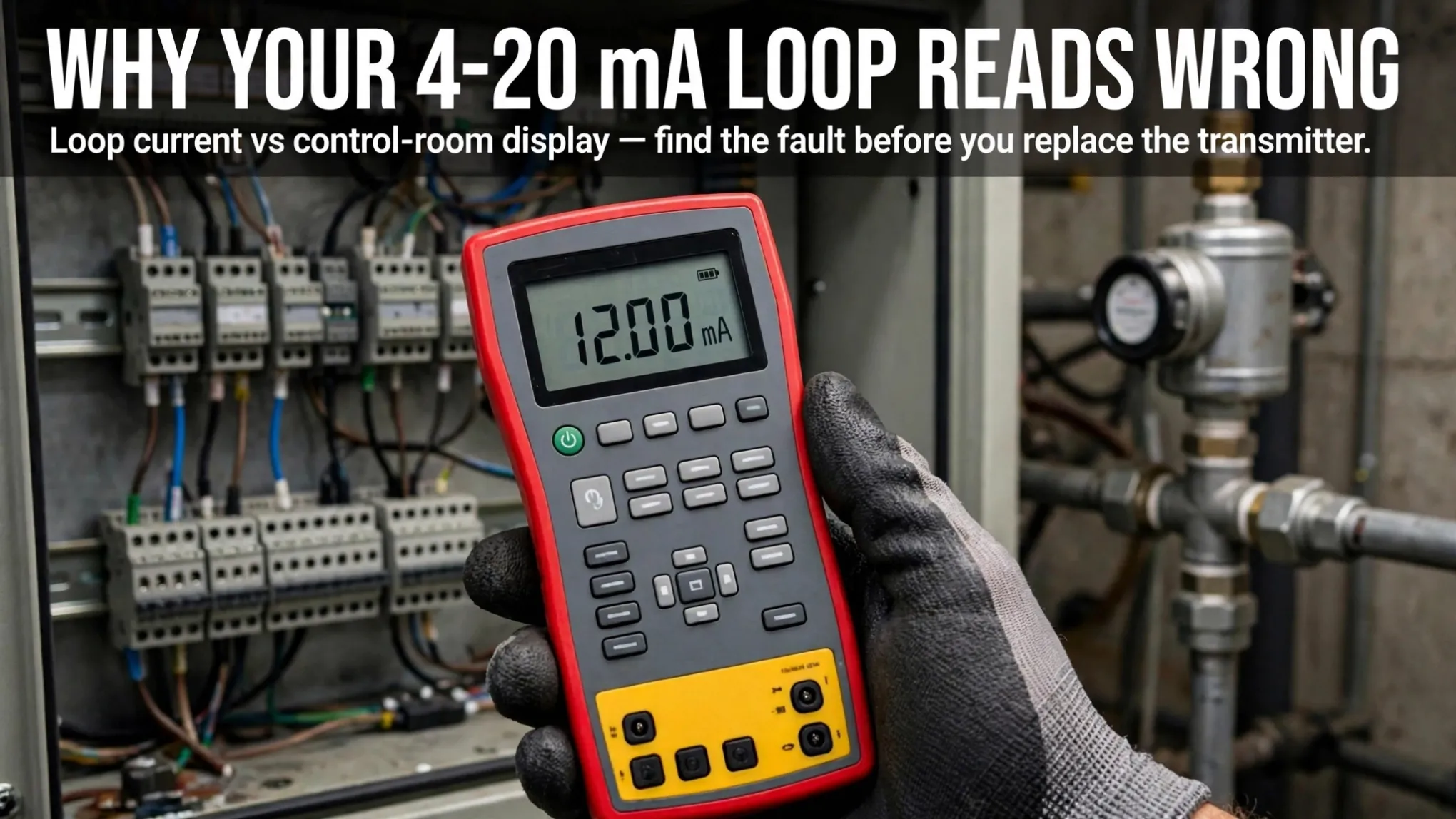
Your transmitter outputs 4.0 mA but the DCS shows 3.8 mA. Learn to trace a 4–20 mA loop fault with a loop calibrator before replacing a good transmitter.
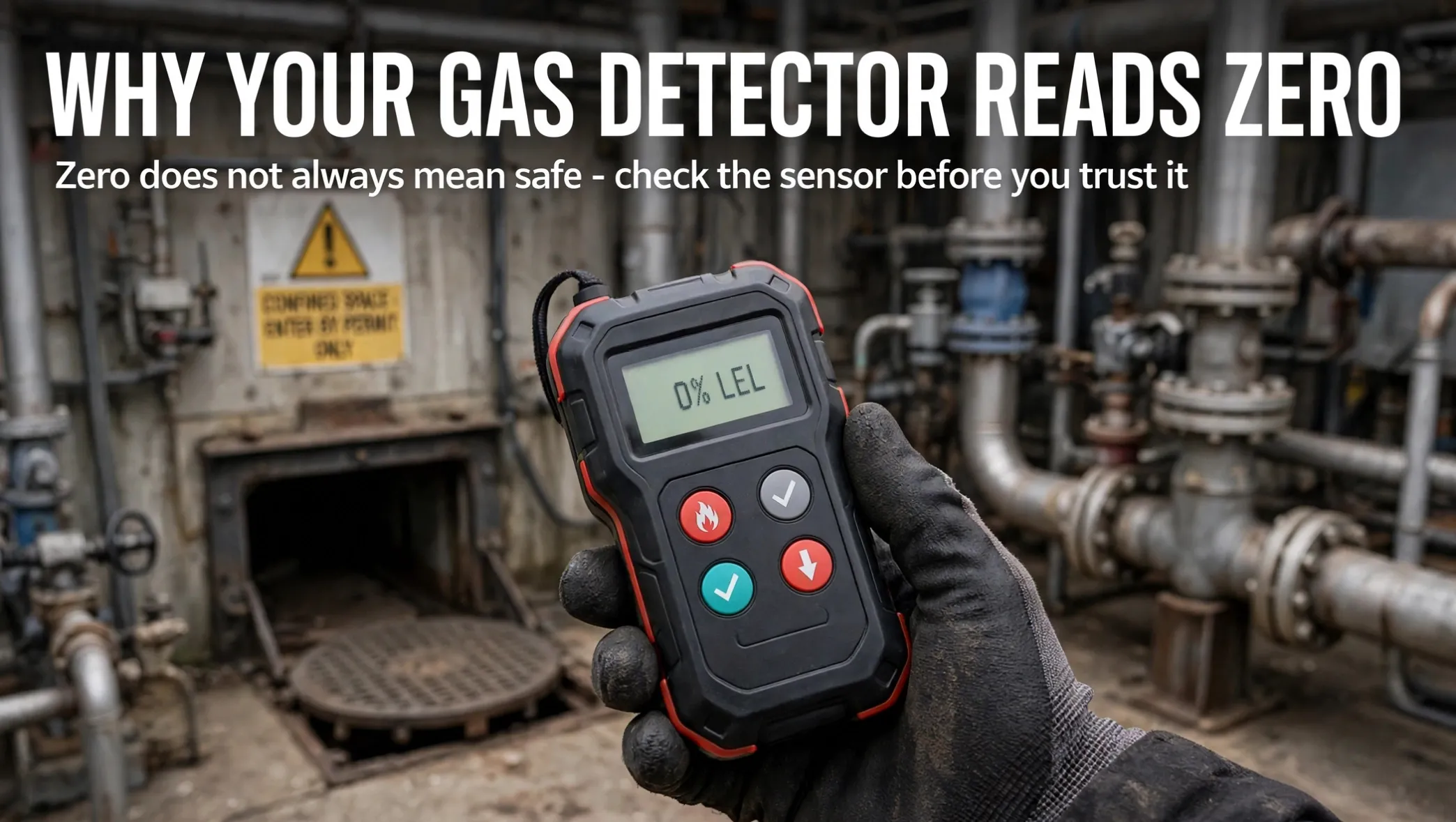
Your gas detector reads zero in clean air — and still reads zero in gas. Learn why sensor poisoning causes false negatives and how a bump test exposes it.